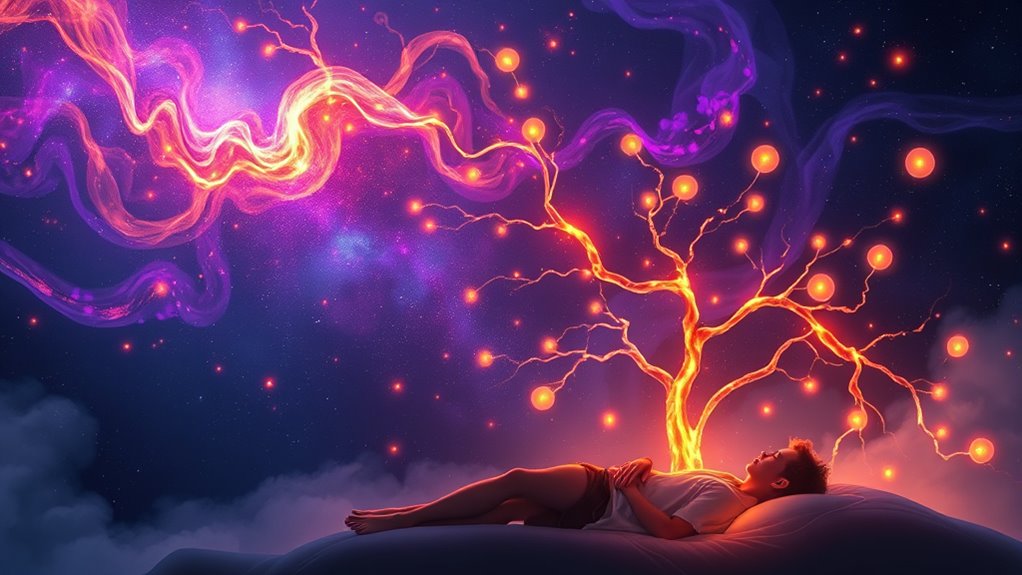

Dreaming occurs as your brain activates specific neural pathways during sleep to process memories, emotions, and experiences. During REM sleep, activity patterns resemble waking consciousness, but with less prefrontal control, creating vivid, often surreal stories. This process helps strengthen memories, regulate emotions, and even spark creativity. Your dreams are not random; they serve a purpose in mental health and learning. If you’re curious, you’ll discover how these fascinating brain functions work together to shape your dreams.
Key Takeaways
- Dreams activate neural pathways that process emotions, memories, and experiences, supporting emotional regulation and mental health.
- During REM sleep, the brain reactivates and consolidates memories, integrating recent events with existing knowledge.
- Reduced activity in the prefrontal cortex during dreaming leads to surreal, illogical dream content, facilitating creative associations.
- Dreaming involves multiple brain regions, including the hippocampus and amygdala, which help strengthen memories and process emotions.
- Overall, dreams serve a purpose in learning, emotional regulation, and memory consolidation, rather than being random mental phenomena.

Have you ever wondered why we dream? Scientists have long studied the mysterious world of dreams, and recent research sheds light on the neural mechanisms behind them. During sleep, your brain doesn’t shut down; instead, it activates specific neural pathways that create the vivid images, emotions, and stories you experience as dreams. These neural mechanisms are complex, involving numerous regions working together to produce the surreal experiences you remember upon waking. One of the most important roles of dreaming is believed to be memory consolidation. When you sleep, your brain processes the day’s events, filtering and strengthening certain memories while discarding others. This process is crucial for learning and adapting, and dreaming appears to play a key role in it. During REM sleep—the stage most associated with vivid dreaming—your brain’s activity patterns resemble waking consciousness but with unique features that facilitate memory integration. The hippocampus, often called the brain’s memory hub, interacts with the neocortex during sleep, helping transfer information from short-term to long-term storage. This transfer isn’t a simple replay; it involves the reactivation of neural circuits that encode experiences, fundamentally rewriting and strengthening them. When you dream, your brain replays fragments of past experiences, connecting them with new information, and creating a cohesive memory network. This is why dreams often incorporate elements from your daily life, but with added symbolism or surreal twists. The neural mechanisms involved in this process also include the prefrontal cortex, which influences how memories are organized and prioritized. During REM sleep, this region becomes less active, allowing more free-flowing, sometimes bizarre, connections to form. This reduction in prefrontal activity might explain the often illogical nature of dreams. Furthermore, dreaming isn’t just about memory; it’s also believed to serve emotional regulation and problem-solving functions. The activation of emotional centers like the amygdala during dreams helps process feelings and stress. Additionally, understanding the diverse roles of different brain regions involved in dreaming helps scientists develop insights into mental health and neuroplasticity. Overall, the neural mechanisms behind dreaming are a finely tuned system that supports memory consolidation, emotional processing, and mental health. Your dreams are not random; they are the product of intricate brain activities designed to help you learn from your experiences, process emotions, and prepare your mind for future challenges. So next time you wake up from a vivid dream, remember that your brain is actively working behind the scenes, weaving together memories and emotions through complex neural processes that are still being unraveled by scientists.
Top picks for "dream science explain"
Open Amazon search results for this keyword.
As an affiliate, we earn on qualifying purchases.
Frequently Asked Questions
Can Dreams Predict the Future?
Dreams can’t reliably predict the future, even if some believe in precognitive dreams. You might notice dream symbolism that seems to hint at upcoming events, but it’s often coincidental or influenced by your subconscious. While some people report dreams that align with future happenings, scientific evidence remains inconclusive. So, while your dreams may reflect your thoughts and fears, they shouldn’t be relied upon as a true forecast of what’s to come.
Why Do Some People Never Remember Their Dreams?
You might never remember your dreams because your brain doesn’t prioritize storing them, especially if you rarely experience lucid dreaming or focus on dream symbolism. When you don’t wake up during or shortly after REM sleep, details fade quickly. Practicing techniques like keeping a dream journal or setting intentions before sleep can boost recall, helping you connect with your dreams and understand their hidden meanings.
How Do Nightmares Differ From Regular Dreams?
Nightmares differ from regular dreams because they often evoke intense fear or distress, and their dream symbolism usually involves threatening situations or emotions. Nightmare causes can include stress, trauma, or anxiety, which heighten emotional responses during sleep. Unlike typical dreams, nightmares tend to wake you up, leaving vivid memories. Your brain processes these negative themes, making nightmares more vivid and emotionally charged, often reflecting underlying fears or unresolved issues.
Do Animals Dream Like Humans?
Have you ever wondered if animals dream like humans? They do, thanks to animal cognition studies showing their brains process experiences during sleep. Researchers observe rapid eye movements and similar brain activity, suggesting they experience dreams. While we can’t fully analyze animal dreams like human dream analysis, evidence indicates animals, from dogs to primates, have vivid, complex dreams. Isn’t it fascinating to think they might dream as deeply as we do?
Can Dreaming Improve Memory and Learning?
Dreaming can indeed improve your memory and learning. During sleep, your brain engages in memory consolidation, strengthening neural connections related to what you’ve learned. This process also promotes learning enhancement by organizing new information and integrating it with existing knowledge. So, when you dream, you’re actively helping your brain process and store memories more effectively, which can lead to better recall and improved skills in your waking life.
Conclusion
Dreams show us our desires, fears, and memories. They connect our past with our present, our emotions with our thoughts, our reality with our imagination. By understanding why we dream, you can better understand yourself, your mind, and your life. Dreams reveal your hidden truths, your deepest hopes, your unspoken fears. Embrace your dreams as a window into your soul, a mirror of your mind, and a guide to your future.