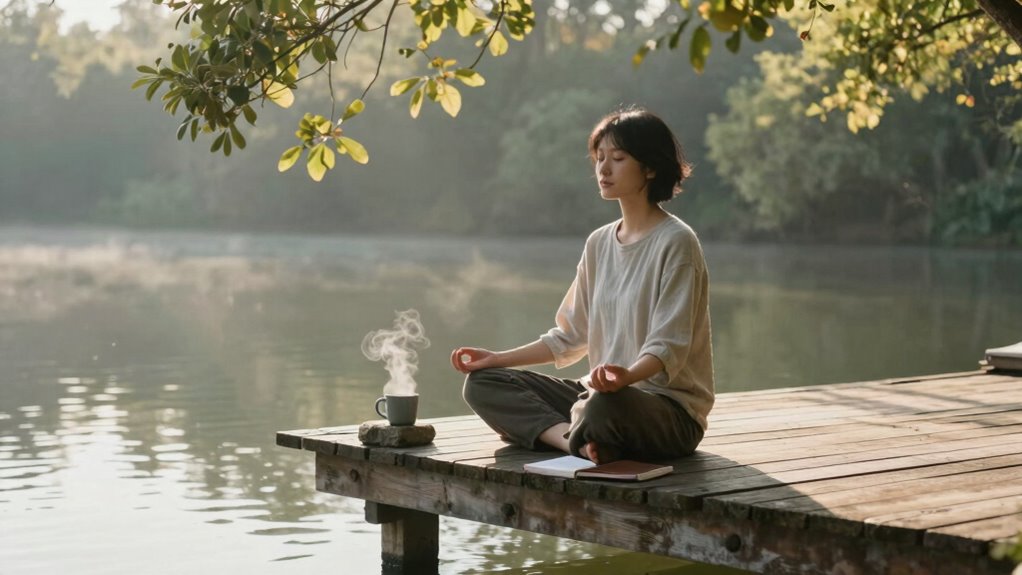

One of the most overlooked mindfulness habits is mindful listening. By fully focusing on the present moment and engaging all your senses during conversations, you reduce misunderstandings and deepen your connections. Combining mindful breathing before interactions helps calm your mind and improves your receptiveness. Incorporating sensory awareness and gratitude journaling can also boost your overall well-being. If you stay curious, you’ll discover easy ways to make mindfulness a natural part of your daily routine.
Key Takeaways
- Consistently practicing mindful breathing before daily interactions to reduce stress and enhance present-moment awareness.
- Incorporating sensory engagement during routines to deepen relaxation and mental clarity.
- Cultivating gratitude journaling to shift focus from stress to appreciation, fostering positivity.
- Engaging in body scans or mindful walks to stay centered and reduce negativity.
- Prioritizing mindful listening to strengthen relationships and prevent misunderstandings.

Mindfulness often brings to mind practices like meditation or deep breathing, but there’s one habit that’s frequently overlooked yet incredibly powerful: mindful listening. When you truly focus on listening, you’re engaging all your senses and becoming fully present in the moment. This simple shift can transform your daily interactions, making them richer and more meaningful. Instead of just hearing words, you start to notice tones, pauses, and emotions behind what’s being said. This heightened awareness fosters connection and reduces misunderstandings. As you practice mindful listening, you become less distracted by your thoughts or worries, which often pull you away from the present. It’s a practice that deepens your relationships and helps you appreciate others more fully. Incorporating mindful breathing into your routine enhances this awareness. Before engaging in a conversation, take a few slow, deep breaths. This calms your mind and anchors you in the present moment. Mindful breathing acts as a reset, allowing you to approach interactions with clarity and openness. When you breathe intentionally, you become more receptive to what others are sharing. It’s a subtle but powerful way to stay grounded amidst the chaos of daily life. Practicing mindful breathing regularly also reduces stress and anxiety, making it easier to stay attentive when listening to others. Additionally, understanding the importance of sensory engagement can deepen your ability to stay present and connected during conversations. Developing visual awareness can further enhance your capacity to interpret non-verbal cues and emotions. Research indicates that sound therapy can influence brainwave patterns and promote relaxation, which can be beneficial when practicing mindful listening. In fact, sauna practices such as heat therapy and proper ventilation can also promote relaxation and mental clarity, supporting your mindfulness efforts. Another often-overlooked mindfulness habit is gratitude journaling. By setting aside a few minutes each day to write down what you’re thankful for, you shift your focus from what’s lacking to what’s abundant in your life. Gratitude journaling cultivates a positive outlook and helps you appreciate the present moment. This habit can be especially effective after practicing mindful listening, as it reinforces feelings of connection and contentment. Engaging in mindfulness practices such as body scans or mindful walks can further deepen your awareness and presence. When you recognize the good around you, you’re less likely to get caught up in negativity or stress. Over time, gratitude journaling rewires your mindset, making you more resilient and optimistic. Combine mindful listening with mindful breathing and gratitude journaling to create a powerful trio for better days. These practices are simple, yet they equip you with tools to stay present, foster gratitude, and deepen your relationships. By making them a daily habit, you’ll find yourself more centered, compassionate, and at peace. These overlooked habits have the potential to transform your outlook, helping you navigate life’s challenges with greater ease and joy.

YOTO Wired Headphones for Kids – Volume-Limiting, Foldable, Ages 3-12
- Travel-Friendly Design: Lightweight, foldable, and includes travel pouch
- Volume-Limiting Safety: Protects kids' hearing during extended listening
- Daisy Chain Sharing: Allows audio sharing between multiple headphones
As an affiliate, we earn on qualifying purchases.
As an affiliate, we earn on qualifying purchases.
Frequently Asked Questions
How Long Should I Practice This Mindfulness Habit Daily?
You should aim for about 10 to 15 minutes of mindfulness practice daily. This duration allows you to develop consistency without feeling overwhelmed. As you become more comfortable, you can gradually extend your daily practice if desired. The key is to maintain regularity, so even short, focused sessions are effective. Prioritize quality over quantity, and you’ll notice positive changes in your mental clarity and overall well-being.
Can This Habit Be Combined With Other Mindfulness Techniques?
Absolutely, you can combine this habit with other mindfulness methods for maximum mental mastery. Embrace habit integration and technique synergy by seamlessly blending practices like deep breathing, body scans, or guided imagery. This dynamic duo deepens awareness, diminishes distractibility, and delivers a more balanced, blissful state of being. Experiment, adapt, and elevate your mindfulness routine—because diverse techniques together create a powerful, peaceful pathway to better days.
Is This Habit Suitable for Beginners or Advanced Practitioners?
This habit is beginner-friendly, making it perfect if you’re just starting out with mindfulness. It’s simple to incorporate into your daily routine and doesn’t require advanced techniques. As you become more experienced, you can gradually combine it with more advanced practices to deepen your mindfulness. Whether you’re a beginner or an advanced practitioner, this habit adapts well, helping you stay present and improve your overall well-being.
What Are Common Challenges When Adopting This Habit?
You might face distraction management issues and consistency challenges when adopting this mindfulness habit. Distractions like noisy environments or wandering thoughts can make it hard to stay focused. Additionally, maintaining regular practice requires discipline, which can be tough amidst busy schedules. To overcome this, start small, set realistic goals, and create a dedicated space for your practice. Over time, these strategies help build consistency and improve your ability to manage distractions.
How Quickly Can I Expect to See Benefits From This Habit?
You’ll notice some immediate benefits, like increased clarity and calmness, within days of practicing this habit. While timeframe expectations vary, consistency is key—think of it as planting seeds that grow over time. Usually, you might start feeling a difference in a week or two, but lasting change takes longer. Keep at it, and over time, these small shifts will truly add up to better days.

Special Supplies Mindfulness Guided Breathing Exercises, Nightlight Mode, Guided Daily Visual Relaxation and Restful Sleep for Kids or Adults, Color Changing Nightlight
- Promotes Mindfulness and Meditation: Supports relaxation and mental clarity
- Soft, Kid-Friendly Colors: Eight calming color options for ambiance
- Three Guided Meditation Modes: Variety of breathing exercises for relaxation
As an affiliate, we earn on qualifying purchases.
As an affiliate, we earn on qualifying purchases.
Conclusion
So, don’t overlook the power of pause. Embrace mindful breathing to ground yourself, to reset, to reconnect. Notice your surroundings, acknowledge your feelings, and return to the present moment. Make it a habit to pause in your busy day, to breathe in calm and breathe out stress. Because when you pause intentionally, you create space for clarity, for peace, for better days—you cultivate mindfulness, and mindfulness cultivates your well-being.

Mindfulness and Sensory Engagement for Emotional Regulation
As an affiliate, we earn on qualifying purchases.
As an affiliate, we earn on qualifying purchases.

The Original Gratitude Journal – Daily Gratitude Practice with Inspiring Prompts & Quotes for Mindfulness, Reflection & Personal Growth 2026 – Wellness Journal for Men & Women
- Boost Happiness Quickly: Enhances mood with daily prompts and quotes
- Capture Positive Moments: Encourages reflection on joyful experiences
- Flexible, Undated Format: Start anytime at your own pace
As an affiliate, we earn on qualifying purchases.
As an affiliate, we earn on qualifying purchases.