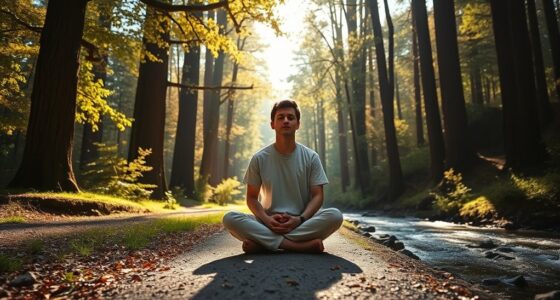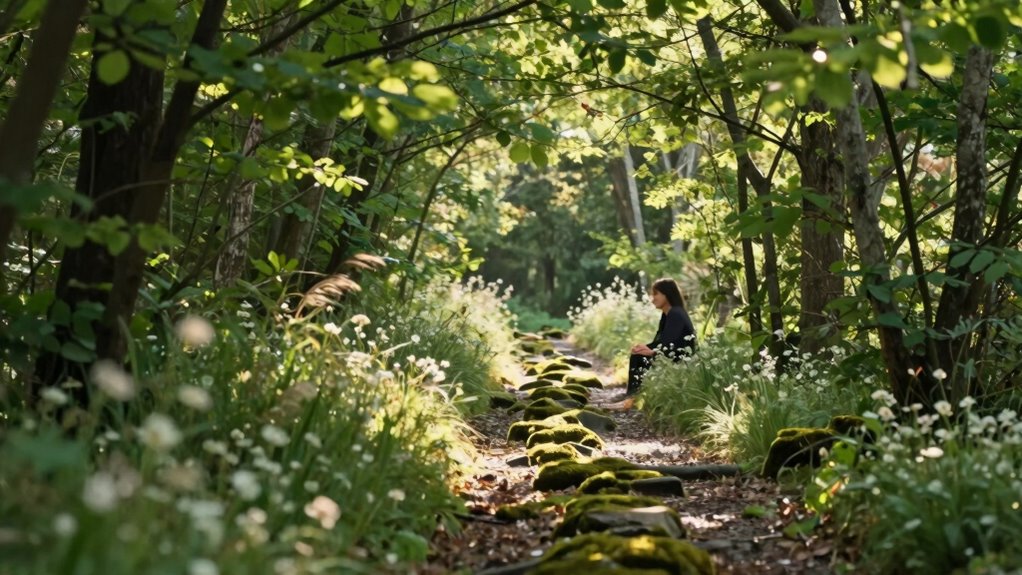

A mindful walk helps you discover more about yourself by encouraging you to pay close attention to your breath, senses, and emotions. As you focus on each step, you become aware of habitual thoughts and reactions that often go unnoticed. This practice reveals your emotional patterns, showing you how you respond to different surroundings. By observing non-judgmentally, you can build emotional resilience and self-compassion. If you keep exploring this journey, you’ll uncover deeper insights into your inner world.
Key Takeaways
- Mindful walking reveals habitual thought patterns and emotional reactions, fostering greater self-awareness.
- It helps identify physical and sensory responses linked to emotional states.
- The practice encourages non-judgmental observation, promoting emotional resilience.
- Engaging senses during a walk uncovers how environment influences feelings and thoughts.
- Movement inward during a mindful walk facilitates self-discovery and deeper self-connection.

Taking a mindful walk can be a powerful way to connect with yourself and the world around you. It’s not just about moving through space; it’s about immersing yourself in each moment. As you step outside, focus on your breathing techniques—inhale deeply through your nose, feeling your lungs expand, then exhale slowly through your mouth. This intentional breathing anchors you in the present, calming your mind and reducing stress. With each breath, you start to notice how your body responds and how your thoughts drift in and out. This conscious breathing helps you develop a greater sense of awareness and control over your mental state. Exploring evidence-based insights about mindfulness can deepen your practice and understanding.
Engage in mindful breathing to stay present, calm your mind, and deepen your awareness during your walk.
As you walk, turn your attention to sensory awareness. Feel the texture of the ground beneath your feet—whether it’s soft grass, rough pavement, or cool dirt. Notice the temperature of the air on your skin, the way the wind brushes past, or the warmth of the sun. Listen to the sounds around you—birds chirping, leaves rustling, distant voices. Smell the scent of blooming flowers or freshly cut grass. Engaging your senses fully, you become more attuned to your environment, and in doing so, you start to learn more about your habitual reactions to different stimuli. Is your mind drawn to pleasant smells or sounds? Do you feel discomfort when encountering noise or chaos? Recognizing sensory awareness as a fundamental aspect of mindfulness can enhance your experience and insight. Developing this skill can also help you notice automatic responses and create space for intentional action.
As your walk progresses, you might find that your thoughts drift to concerns, memories, or plans. Instead of getting caught up in them, gently acknowledge these mental patterns, then bring your focus back to your breathing and sensory experiences. This practice teaches you patience and non-judgmental awareness. Over time, you’ll notice how your mind becomes less reactive and more observant. You may also discover how certain environments or sensations evoke particular feelings—calmness, irritation, joy—that offer insight into your inner world. A mindful walk becomes a mirror, reflecting your current state and helping you understand your habits and tendencies without judgment. Incorporating mindfulness techniques can further deepen your self-awareness and emotional resilience. Recognizing the powerful meanings behind your reactions can lead to greater clarity and personal growth.
Ultimately, a mindful walk isn’t just about physical movement; it’s a journey inward. By intentionally engaging in breathing techniques and sensory awareness, you peel back layers of automatic thinking, revealing truths about your emotional landscape. This practice encourages self-compassion and curiosity, allowing you to learn more about yourself with each step you take. It’s a simple yet profound way to foster clarity, emotional resilience, and a deeper connection to your true self.

The Long Road Turns to Joy: A Guide to Walking Meditation
Used Book in Good Condition
As an affiliate, we earn on qualifying purchases.
As an affiliate, we earn on qualifying purchases.
Frequently Asked Questions
How Often Should I Go on a Mindful Walk for Maximum Benefit?
You should aim for a daily practice of mindful walking to gain maximum benefits. Consistency helps you develop awareness, reduce stress, and improve focus over time. Even just 10 to 15 minutes each day can make a significant difference. By making mindful walking a regular habit, you create a calming routine that enhances your mental clarity and emotional well-being, allowing you to stay grounded and present throughout your day.
Can Mindful Walking Help With Anxiety or Depression?
Think of a mindful walk as a gentle tide washing over your worries. Yes, it can help with anxiety and depression by grounding you in the present moment. Using mindfulness techniques during your walk, you focus on your breath, sensations, and surroundings, fostering calm and clarity. These mental health benefits strengthen resilience, reduce stress, and promote emotional balance, making each step a nourishing act for your well-being.
What if My Mind Keeps Wandering During a Walk?
If your mind keeps wandering during a walk, don’t worry—distraction management is key. Gently redirect your focus to your breath, footsteps, or surroundings to enhance your focus. When your thoughts drift, acknowledge them without judgment and bring your attention back to the present moment. Over time, this practice will strengthen your ability to stay mindful, helping you enjoy the walk more fully and gain clearer insights about yourself.
Is Special Equipment Needed for a Mindful Walk?
You don’t need special footwear or walking aids for a mindful walk. Just wear comfortable shoes that support your feet, whether that’s sneakers or sandals. Focus on your surroundings and your breath instead of gear. If you have specific needs, like balance issues, using walking aids is perfectly fine. The goal is to be present, so choose what helps you walk mindfully without distractions or discomfort.
Can Children Benefit From Mindful Walking Practices?
Like a sponge soaking up water, children can benefit from mindful walking practices. It enhances their child development and boosts sensory awareness, helping them stay present and connected to their surroundings. Through these walks, kids learn to observe textures, sounds, and smells, fostering focus and emotional regulation. By practicing mindfulness early, you equip them with valuable tools for managing stress and building resilience as they grow.

Breathing Pal 'Kyle'- Mindfulness Breathing Light, Guided Visual Meditation Breathing Light, Anxiety Relief Items for Calm Down Corner/Meditation/Sleep for Adult&Kid
3 BREATHING EXERCISES: Whether you're looking to relax, focus, or sleep, our device offers three effective breathing techniques…
As an affiliate, we earn on qualifying purchases.
As an affiliate, we earn on qualifying purchases.
Conclusion
As you step back onto your path after a mindful walk, you realize it’s like tending a garden—you’ve uncovered hidden weeds and nurtured new blossoms within yourself. Just as a gardener patiently observes, you’ve learned to notice your thoughts without judgment, fostering growth and clarity. Research shows that mindful walking reduces stress and enhances self-awareness. So, keep walking, keep discovering—each step is a gentle reminder that understanding yourself is a journey, not a destination.

NUKAYAI Worry Stone Crystals and Healing Stones Anxiety Fidgets Natural Meditation Accessories 7 Chakra Thumb Sensory Mental Health Depression Stress Anxiety Relief Items Mother's Day Gifts for Women
【Premium Quality】Crafted from natural crystal, our Fidget Oval Thumb Worry Stones are meticulously designed to provide comfort and…
As an affiliate, we earn on qualifying purchases.
As an affiliate, we earn on qualifying purchases.

Mental Health & Shadow Work Journal: Empower – Guided Prompts for Reducing Anxiety, Building Mindfulness, and Emotional Healing – A Tool for Self-Awareness and Personal Transformation
Empower Your Mental Health – Combine shadow work and mindfulness with guided prompts designed to help reduce anxiety,…
As an affiliate, we earn on qualifying purchases.
As an affiliate, we earn on qualifying purchases.