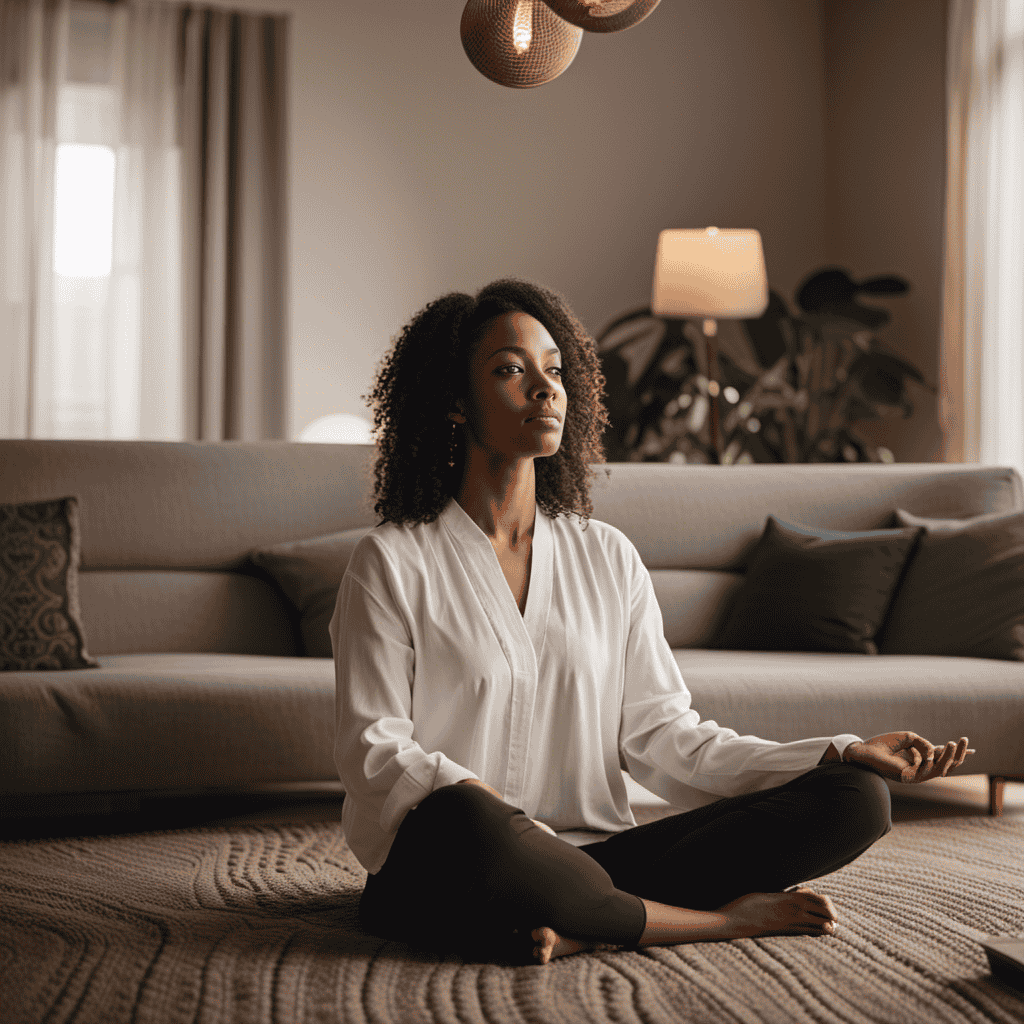
To use music, silence, and breath in meditation, start by choosing calming sounds or nature noises to set the mood and guide your focus. Pay close attention to your breath, noticing each inhale and exhale to anchor yourself in the present. Incorporate silence afterward to foster inner stillness and clarity. By thoughtfully combining these elements, you’ll create a powerful, focused environment that enhances your mindfulness and emotional balance—discover more ways to deepen your practice as you explore further.
Key Takeaways
- Use calming music or nature sounds to set a tranquil mood and guide your focus during meditation.
- Incorporate conscious breath awareness to anchor yourself in the present moment and deepen relaxation.
- Integrate periods of silence to cultivate inner stillness and observe thoughts without judgment.
- Create a distraction-free environment that thoughtfully combines sound, silence, and breath for a richer experience.
- Transition smoothly between sound, silence, and breath to enhance mindfulness, clarity, and emotional balance.
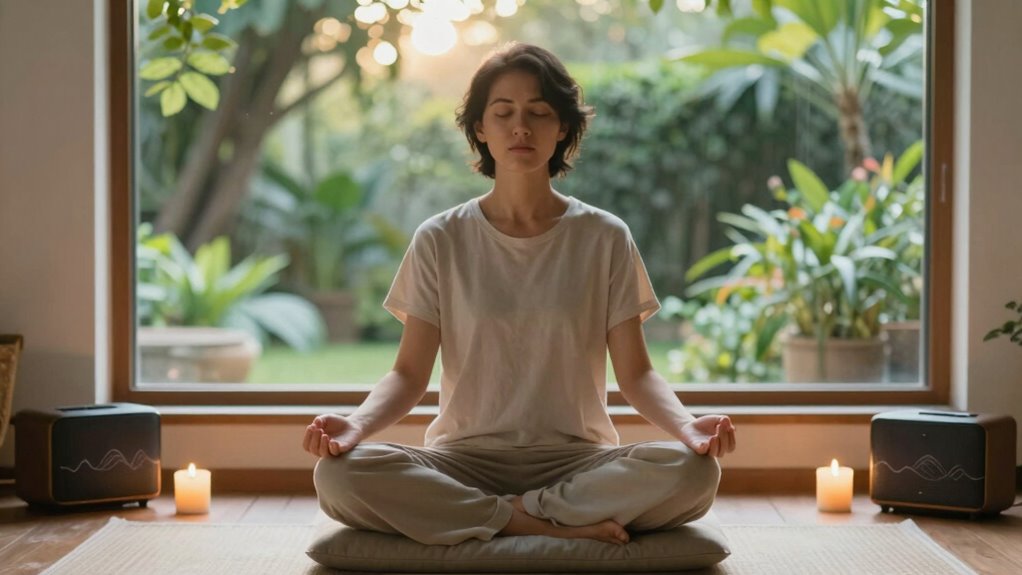
Meditation can be enhanced by thoughtfully incorporating music, silence, and breath, each serving as a powerful tool to deepen your practice. When you use sound therapy, you tap into the calming effects of carefully chosen sounds—such as gentle melodies, nature noises, or ambient tones—that help set the mood and guide your focus. These sounds can drown out distractions, allowing you to settle more quickly into a meditative state. Experiment with different types of music to discover what resonates most with you, whether it’s soft instrumental, chanting, or nature sounds. The key is to find something that brings you peace and encourages your mind to relax.
Breath awareness is another essential component that can greatly enhance your meditation. By consciously paying attention to your breath, you anchor yourself in the present moment, reducing wandering thoughts. Focus on the sensation of air entering and leaving your body—notice the rise and fall of your chest or the feeling of air passing through your nostrils. This simple act helps you develop mindfulness and can make your meditation more profound. When combined with sound therapy, breath awareness becomes even more powerful. For example, you might synchronize your breathing with the rhythm of music or sound, creating a harmonious flow that deepens your sense of calm and presence.
Silence, often underrated, provides an indispensable contrast to sound and breath practice. It offers a space for your mind to settle without external stimuli, fostering clarity and inner stillness. Incorporating periods of silence into your meditation allows you to observe thoughts without judgment and cultivate a sense of spaciousness within. You can start with a few minutes of silence after a sound-based meditation or use silence intentionally as a meditative anchor. This quietude encourages you to listen inward, sharpening your awareness of subtle sensations and thoughts. Understanding the importance of mindfulness and its role in meditation can help you better appreciate how these elements work together. Additionally, cultivating inner stillness through silence can enhance your overall emotional balance and mental clarity.
Additionally, creating a meditative environment that is free from distractions enhances the effectiveness of your practice. Altogether, the thoughtful integration of music, silence, and breath in your meditation creates a rich sensory environment that supports deepening your practice. Sound therapy can set the tone, breath awareness keeps you grounded, and silence offers a reflective space. By intentionally blending these elements, you can cultivate a more focused, peaceful, and transformative meditation experience. With practice, you’ll find that each component complements the others, helping you reach new levels of mindfulness and emotional balance.

Tim Janis Perfect Serenity: Relaxing Instrumental Music CD – Yoga, Massage, Meditation CD, Relaxing Music for Stress Relief – Soothing Sounds for Deep Relaxation – Tranquil New Age Compositions
- Serenity Journey: Tranquil instrumental music for stress relief
- Soothing Soundscapes: Relaxing New Age melodies for meditation
- Deep Relaxation: Music for yoga, massage, and relaxation
As an affiliate, we earn on qualifying purchases.
As an affiliate, we earn on qualifying purchases.
Frequently Asked Questions
Can I Combine Music, Silence, and Breath in One Meditation Session?
Yes, you can combine music, silence, and breath in one meditation session. This creates a rich sensory balance, enhancing your meditation rituals. Start with silence to center yourself, then gradually introduce calming music to deepen focus, and use breath awareness to anchor your attention. Mixing these elements keeps your practice dynamic and engaging, allowing you to explore different sensory experiences and cultivate a deeper sense of relaxation and mindfulness.
What Types of Music Are Best for Meditation?
Think of music for meditation as a gentle stream guiding your mind’s journey. Background melodies with soft, flowing tones create a calming atmosphere, while nature sounds like rustling leaves or flowing water ground you in the present. Opt for tracks that are soothing, instrumental, and free of sudden changes. These natural and melodic sounds help you stay relaxed, deepen your focus, and foster a peaceful state of mind during your meditation.
How Do I Know if I’M Breathing Correctly During Meditation?
You know you’re breathing correctly during meditation when your breaths are slow, steady, and natural. Focus on your breathing using mindfulness techniques, paying attention to the inhale and exhale without forcing it. If your mind drifts, gently bring your focus back to your breath. Proper breathing involves relaxed, diaphragmatic breaths that support your meditation, helping you stay present and centered throughout your practice.
Is Silence More Effective Than Music for Meditation?
Silence often surpasses sound, providing a peaceful, pure environment for meditation, especially in silent surroundings. If your musical preferences pull your focus, silence might serve you better, creating calm without distraction. However, some find gentle music enhances their experience, making meditation more manageable. Ultimately, the effectiveness depends on your personal preferences and goals. Experiment with both to discover whether silent serenity or soothing sounds best support your meditation journey.
How Long Should Each Element Be Incorporated Into Practice?
You should incorporate background ambiance, silence, and breath based on your meditation duration and comfort. For shorter sessions, spend about 5-10 minutes gradually introducing background ambiance or silence, focusing on your breath. During longer meditations, alternate between 10-20 minutes of silence and a few minutes of gentle music or ambient sounds. Adjust the timing as you become more experienced, ensuring each element enhances your overall meditation practice.
nature sound machine for meditation
As an affiliate, we earn on qualifying purchases.
As an affiliate, we earn on qualifying purchases.
Conclusion
As you embrace music, silence, and breath in your practice, remember they’re like tools in a toolbox—each serves a unique purpose. I once heard a meditator say silence is like a calm lake, reflecting clarity, while music is a gentle breeze, uplifting your spirit. When you blend these elements, you craft a balanced sanctuary within. Trust your intuition—your mind’s landscape blossoms when guided by these simple, powerful rhythms.

Mindsight 'Original Breathing Buddha' Guided Visual Meditation | 3 Modes to Slow Your Breathing & Calm Your Mind | Stress & Anxiety Relief | Wellness Gift | Adults, Kids, Classrooms | USB Rechargeable
- Purpose: Calms and focuses the mind daily
- Usage Modes: 3 breathing modes and night light
- Breathing Techniques: 4/7/8, 5/5, 4/4/4/4 patterns
As an affiliate, we earn on qualifying purchases.
As an affiliate, we earn on qualifying purchases.
As an affiliate, we earn on qualifying purchases.