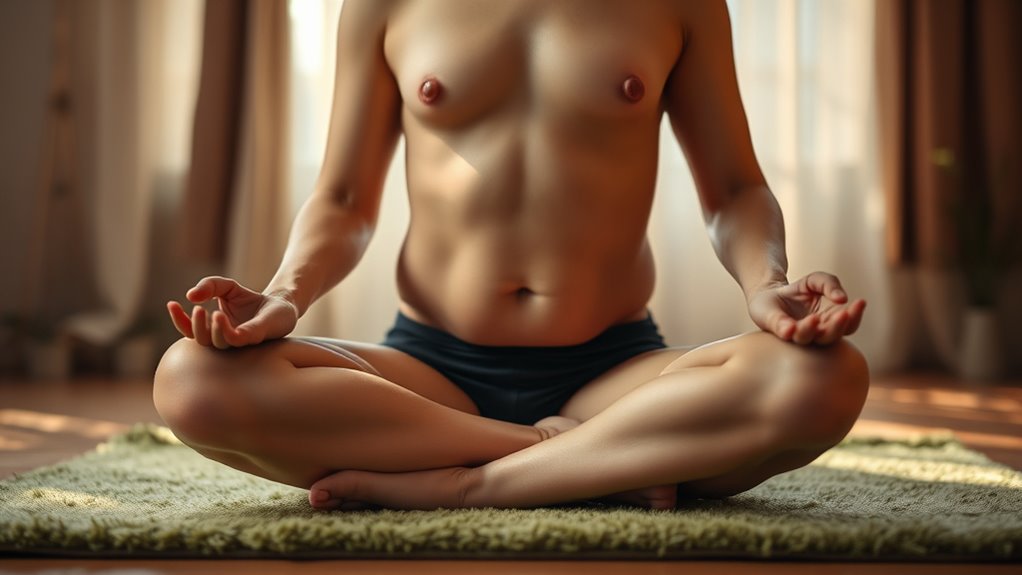

To promote relaxation, focus on mindful breathing techniques like diaphragmatic or belly breathing. Breathe slowly through your nose, letting your belly rise as you inhale, then exhale gently, allowing your belly to fall. Pay close attention to each breath, staying present and relaxed. Practicing regularly helps slow your heart rate, reduce tension, and quiet racing thoughts. Keep exploring these simple patterns to discover even more ways to calm your mind and body effectively.

Turn your wind-down time into listening time
- Thousands of audiobooks, podcasts and originals
- Listen on your phone, tablet or Echo — also offline
- Cancel anytime
Key Takeaways
- Practice diaphragmatic (belly) breathing to activate the body’s relaxation response and reduce stress.
- Focus on mindful breathing by paying close attention to each inhale and exhale without judgment.
- Maintain slow, steady breaths with a relaxed posture to promote calmness and mental clarity.
- Incorporate breathing exercises into daily routines to enhance overall stress management.
- Use controlled breathing to signal the nervous system to slow down and quiet racing thoughts.
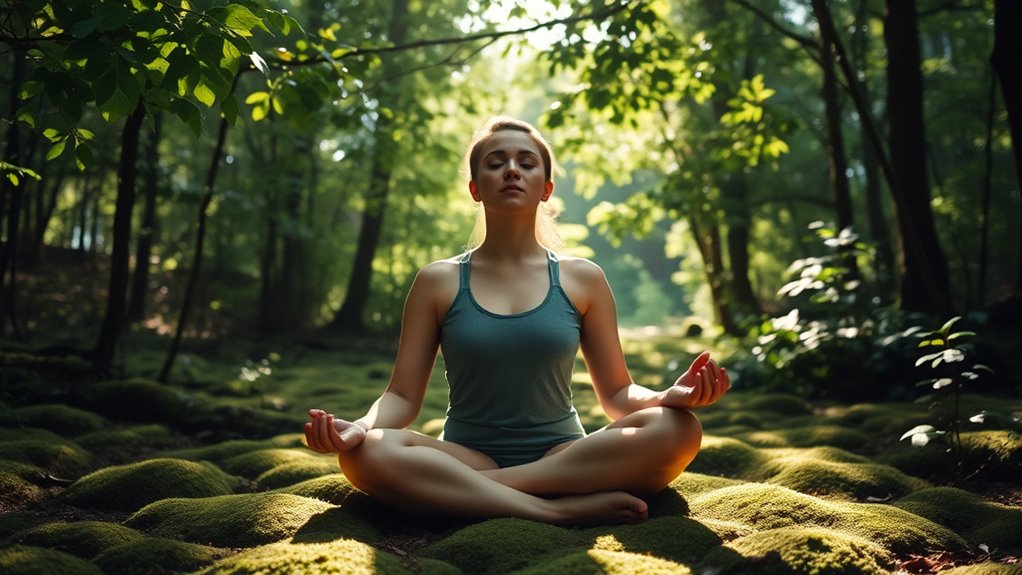
Breathing patterns play a vital role in helping you achieve relaxation and reduce stress. When you focus on your breath, you send a signal to your nervous system that it’s okay to slow down. One effective technique is mindful breathing, where you pay close attention to each inhale and exhale without judgment. This practice helps you stay present, quiets racing thoughts, and cultivates a sense of calm. By simply observing your breath, you become more aware of how tension builds up and how you can consciously release it. Incorporating mindful breathing into your daily routine can make a substantial difference in managing stress and fostering relaxation.
Another powerful method is diaphragmatic breathing, also called belly breathing. This involves engaging your diaphragm fully with each breath, allowing your belly to rise as you inhale and fall as you exhale. Diaphragmatic breathing encourages deeper, more efficient breaths, which increase oxygen intake and activate the body’s relaxation response. When you breathe this way, you’re not just shallowly filling your lungs; you’re using your diaphragm to maximize airflow, which helps slow your heart rate and lower blood pressure. Many people tend to breathe shallowly from the chest, especially when anxious or stressed. Learning diaphragmatic breathing shifts your breathing pattern to a more relaxed, restorative state.
Using proper breathing techniques can also influence your projector setup, as mindful breathing helps maintain focus and calmness during intricate adjustments or calibrations.
To practice diaphragmatic breathing, find a comfortable position—whether sitting or lying down—and place one hand on your chest and the other on your belly. As you inhale through your nose, focus on expanding your belly outward, feeling the hand move as your diaphragm fills with air. Exhale slowly through your mouth or nose, allowing your belly to gently fall. Keep your shoulders relaxed and avoid rushing the process. Aim for a slow, steady rhythm, breathing in for about four seconds, then out for four seconds, gradually increasing the duration as you become more comfortable. This technique not only calms your mind but also relaxes your muscles, making it easier to let go of tension.
Consistent practice of mindful breathing and diaphragmatic breathing can markedly improve your overall sense of well-being. With time, these techniques become second nature, empowering you to manage stress more effectively whenever life feels overwhelming. By intentionally focusing on your breath and engaging your diaphragm, you take control of your physiological response to stress, promoting relaxation and mental clarity. Whether you need to unwind after a hectic day or prepare yourself for a challenging situation, these breathing patterns serve as simple yet powerful tools you can access anytime, anywhere.
diaphragmatic breathing exercise tools
As an affiliate, we earn on qualifying purchases.
As an affiliate, we earn on qualifying purchases.
Frequently Asked Questions
Can Breathing Patterns Help With Chronic Anxiety Disorders?
Yes, breathing patterns can help with chronic anxiety disorders. When you practice mindfulness meditation combined with diaphragmatic breathing, you actively calm your nervous system. This deep, intentional breathing slows your heart rate and reduces stress hormones, easing anxiety symptoms. By making these techniques part of your routine, you’ll gain better control over your anxiety and feel more relaxed and centered throughout the day.
How Long Should I Practice Breathing Exercises Daily?
You should practice breathing exercises for about 10 to 15 minutes daily to experience the full breathing technique benefits. Consistency is key, so aim for daily practice to help reduce stress and improve overall relaxation. By dedicating this time, you’ll strengthen your ability to stay calm during challenging moments, making these exercises a valuable part of your routine. Regular practice maximizes the calming effects of breathing techniques, supporting your mental well-being.
Are There Any Risks Associated With Specific Breathing Techniques?
There are some risks involved with specific breathing techniques, especially if you have certain health conditions like asthma or cardiovascular issues. Always follow safety precautions, such as avoiding overexertion or holding your breath too long. If you feel dizzy, uncomfortable, or short of breath, stop immediately and consult a healthcare professional. Being mindful of your body’s responses helps guarantee safe practice and minimizes potential risks implicated.
Can Breathing Patterns Improve Sleep Quality?
Imagine your mind as a calm lake; mindful breathing can smooth its surface, helping you fall asleep faster. Yes, breathing patterns can improve sleep quality by calming your nervous system and enhancing sleep hygiene. When you focus on slow, deep breaths, you signal your body to relax, making it easier to drift off. Practicing these techniques nightly creates a peaceful passage from wakefulness to restful sleep.
Do Breathing Exercises Work Instantly or Require Consistent Practice?
Breathing exercises can provide instant relief by calming your nervous system, but for lasting benefits, consistent practice is essential. When you incorporate regular breathing routines, you build resilience against stress and improve overall relaxation over time. So, while you might feel immediate calm, to truly experience the long-term benefits, make these exercises a daily habit. This way, you optimize both instant relief and sustained relaxation.
mindfulness breathing meditation kit
As an affiliate, we earn on qualifying purchases.
As an affiliate, we earn on qualifying purchases.
Conclusion
As you gently breathe in, imagine inhaling calm like a cool breeze sweeping through a quiet forest. With each exhale, release tension, letting it drift away like clouds dissolving into the evening sky. Feel your body soften, your mind settling into a peaceful stillness. By embracing these calming breathing patterns, you create a sanctuary within—where serenity blooms, and stress simply melts into the fading horizon. Breathe deeply, and let tranquility become your constant companion.
As an affiliate, we earn on qualifying purchases.
As an affiliate, we earn on qualifying purchases.
Halloween Picks
halloween
As an affiliate, we earn on qualifying purchases.