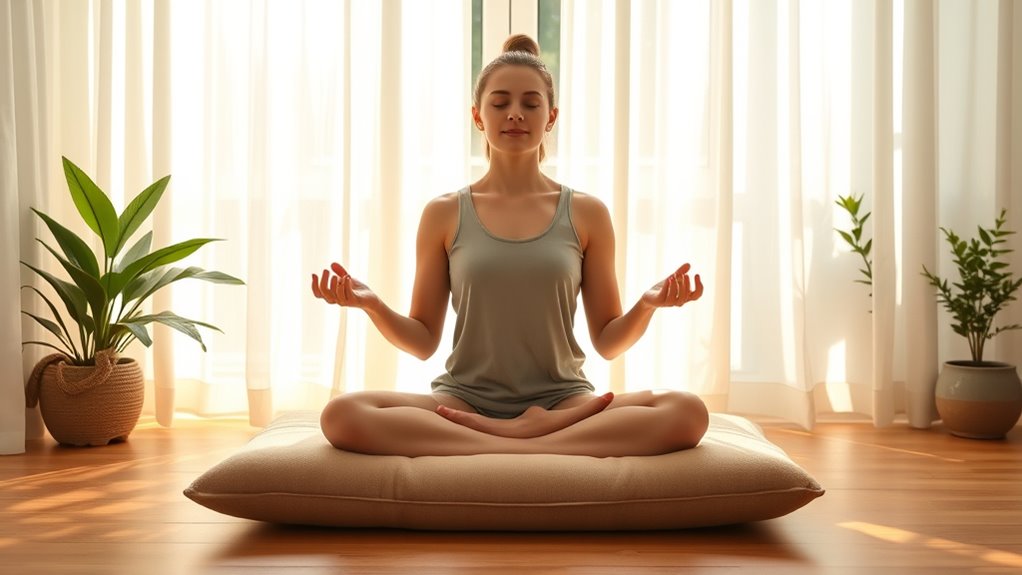

To start mindful meditation as a beginner, find a quiet space where you can sit comfortably and focus on your breath. Begin by paying attention to each inhale and exhale, noticing sensations like air cooling or chest movement. You can also scan your body from toes to head, observing any tension or relaxation. Regular practice helps increase awareness, calmness, and focus. Keep practicing consistently, and you’ll discover even more ways to deepen your mindfulness experience.

Turn your wind-down time into listening time
- Thousands of audiobooks, podcasts and originals
- Listen on your phone, tablet or Echo — also offline
- Cancel anytime
Key Takeaways
- Start in a quiet, comfortable space, sitting with relaxed posture and closing your eyes if preferred.
- Focus on your breath, noticing each inhale and exhale without trying to change it.
- Use body awareness by scanning from toes to head, observing sensations without judgment.
- Practice regularly to improve mental clarity, emotional resilience, and present-moment awareness.
- No special equipment needed; simple breathing and body scans make meditation accessible for beginners.
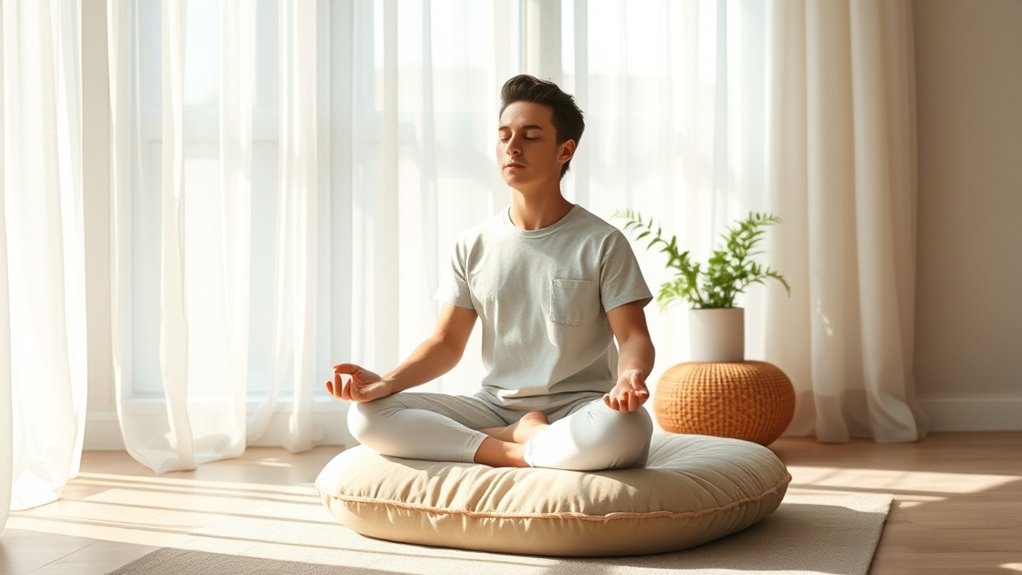
Are you curious about how mindful meditation can improve your daily life? If so, you’re not alone. Many beginners discover that simple practices like breathing exercises and developing body awareness can lead to noticeable changes in how you handle stress, focus, and overall well-being. The beauty of mindful meditation lies in its accessibility—no special equipment or lengthy sessions are needed to start experiencing its benefits. Instead, it begins with paying close attention to your breath and tuning into your body in the present moment.
To begin, find a quiet space where you can sit comfortably without distractions. Close your eyes if that feels comfortable, and take a deep breath in through your nose, feeling the air fill your lungs. Then slowly exhale through your mouth or nose, noticing the sensation of the breath leaving your body. These breathing exercises anchor your attention and help calm your mind. As you breathe, try to observe each inhale and exhale without trying to change it. Simply notice the rhythm, the coolness of the air, or the rise and fall of your chest. Over time, this focus on your breath becomes a powerful tool for cultivating mindfulness and staying grounded in the present.
Find a quiet space, breathe deeply, and observe your breath to cultivate mindfulness and calm your mind.
In addition to breathing exercises, body awareness is a fundamental aspect of mindful meditation. As you continue to breathe naturally, direct your attention to different parts of your body. Start at your toes and slowly move upward, noticing any sensations, tension, or relaxation. Are your feet tense or relaxed? Is there warmth or coolness in your hands? The goal isn’t to judge what you feel but to observe with curiosity. This practice helps you become more attuned to your physical state, which can reveal sources of stress or discomfort you might not have noticed otherwise. Developing body awareness is essential, as it enhances your ability to recognize physical and emotional cues, fostering greater mindfulness in daily life. Over time, body awareness fosters a deeper connection with your physical self, reducing anxiety and increasing your sense of calm.
Practicing these techniques regularly, even for just a few minutes daily, can markedly enhance your mental clarity and emotional resilience. Mindful meditation isn’t about stopping your thoughts but learning to observe them without attachment. By focusing on your breath and body, you create a safe space to pause, breathe, and reset amid life’s chaos. As you develop this habit, you’ll likely find that you’re better equipped to manage everyday stressors, improve your concentration, and enjoy a greater sense of presence throughout your day. Remember, mindfulness is a skill that grows with practice, so be patient and gentle with yourself as you set out on this journey.
As an affiliate, we earn on qualifying purchases.
Frequently Asked Questions
Can I Meditate While Lying Down?
Yes, you can meditate while lying down. Lying down benefits include relaxation and reducing physical tension, making it easier to focus on your breath or sensations. Just make certain your meditation posture is comfortable yet alert, so you don’t drift off to sleep. Maintain a gentle awareness of your body, keeping your spine aligned. This posture can be ideal for calming your mind, especially if you find sitting uncomfortable or distracting.
How Long Should My Meditation Sessions Be Initially?
Start with short meditation sessions, around 5 to 10 minutes, as part of your beginner tips. This meditation duration helps you build consistency without feeling overwhelmed. As you become more comfortable, gradually increase your practice time. Remember, quality matters more than length, so focus on your breath and staying present. Consistent daily practice will help you develop a calming routine and deepen your mindfulness skills over time.
Is It Necessary to Meditate at the Same Time Every Day?
It’s not necessary to meditate at the same time every day, but maintaining meditation consistency helps build a strong daily routine. When you choose a specific time, it becomes easier to stick with it, making meditation a habit. If your schedule varies, simply aim for regularity throughout the week. Flexibility is okay; the key is to integrate meditation into your life consistently, fostering mindfulness and reducing stress over time.
Can Mindful Meditation Replace Medication for Anxiety?
Think of mindful meditation as a gentle raft steering your anxiety river. It can’t fully replace medication if you’re dependent on it, but it offers powerful alternative therapies to manage stress. While meditation can reduce anxiety over time, it shouldn’t be seen as a cure-all. Consult your healthcare provider to create a balanced approach, combining medication with mindfulness practices to support your mental health journey effectively.
What if I Can’t Clear My Mind During Meditation?
If you can’t clear your mind during meditation, don’t worry—mind wandering is normal. Instead of forcing mental clarity, gently redirect your focus back to your breath or a specific sound. Consistent practice helps you accept distractions without judgment, gradually improving your ability to stay present. Over time, you’ll notice your mind becomes calmer, making it easier to achieve mental clarity and enjoy the full benefits of meditation.
As an affiliate, we earn on qualifying purchases.
Conclusion
Think of mindful meditation as tending a small, delicate garden. With patience and gentle care, each moment becomes a seed that grows into calm and clarity. Every time you sit to meditate, you’re watering those seeds, helping your inner garden flourish. Remember, even the tiniest effort nurtures your mind’s landscape. Keep tending your garden with kindness and consistency, and watch how your peace blossoms, transforming your daily life into a serene sanctuary.
As an affiliate, we earn on qualifying purchases.
As an affiliate, we earn on qualifying purchases.
Fall Picks
fall essentials
As an affiliate, we earn on qualifying purchases.