
Art has a powerful ability to heal communities by inspiring resilience, fostering dialogue, and transforming shared spaces. When creatives engage in public murals and community projects, they help turn blank walls into stories of hope, strength, and collective identity. These efforts encourage collaboration, build trust, and promote emotional recovery. By working together through art, neighborhoods can find renewed purpose and unity. If you keep exploring, you’ll discover how these creative acts truly build stronger, more connected communities.

Turn your wind-down time into listening time
- Thousands of audiobooks, podcasts and originals
- Listen on your phone, tablet or Echo — also offline
- Cancel anytime
Key Takeaways
- Public murals and community art projects foster collective identity, symbolize resilience, and turn shared spaces into stories of hope.
- Creating art in challenged neighborhoods encourages collaboration, dialogue, and social activism, promoting community pride.
- Art serves as a therapeutic outlet, reducing stress, aiding emotional healing, and helping individuals and communities process trauma.
- Community murals facilitate conversations on social issues, building understanding, empathy, and social cohesion.
- Participating in art initiatives inspires positive change, strengthens community bonds, and promotes resilience and recovery.

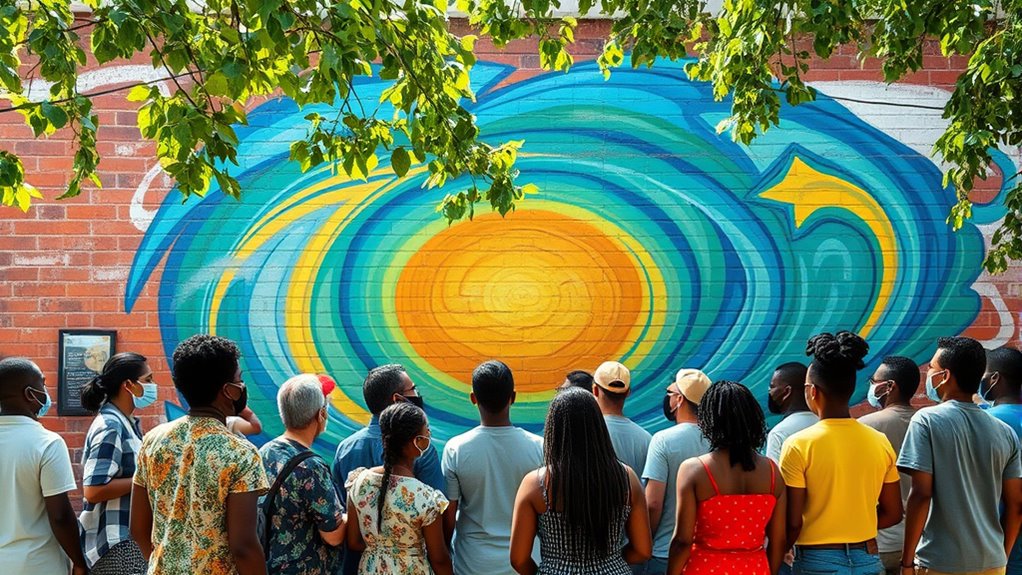
Art has a powerful ability to heal, offering a creative outlet that can reduce stress, boost mood, and foster emotional resilience. When you engage with public art or participate in creating community murals, you’re not just making something visually appealing—you’re contributing to something much larger. Public art transforms shared spaces, making them more vibrant and meaningful. Community murals, in particular, serve as powerful symbols of collective identity, history, and hope. They turn blank walls into stories that reflect the community’s struggles, victories, and dreams. As you work on these projects, you become part of a process that unites people, giving everyone a sense of ownership and pride.
Public art and murals transform spaces, fostering community pride and collective healing through shared creativity and stories.
Creating community murals often involves collaboration with neighbors, local organizations, and other artists. This collective effort encourages dialogue, bridges divides, and fosters understanding. When you see a mural take shape, it’s more than paint on a wall; it’s a visual representation of community resilience. These murals often emerge in neighborhoods that face social or economic challenges, acting as a form of visual activism. They show that the community cares about its space and its people, inspiring others to get involved and advocate for positive change.
Participating in public art initiatives can also be a deeply healing experience for individuals. It offers an outlet to express emotions that might be difficult to articulate otherwise. As you paint or design, you might find relief from personal stress or trauma. The act of creating something meaningful in a public setting fosters a sense of purpose and connection. It reminds you that your voice matters and that art can be a tool for social and emotional healing. For communities, these murals and public art installations become landmarks of collective strength, promoting healing on a broader scale. Additionally, integrating architectural solutions into community art projects can enhance the overall impact by ensuring that spaces are both functional and inspiring.
Moreover, public art and murals can spark community conversations about tough issues—racial injustice, environmental concerns, local history—helping people confront and process complex emotions. When you see or contribute to these works, you’re participating in a dialogue that promotes empathy and understanding. The process of creating and experiencing public art becomes a shared act of healing, breaking down barriers and building trust. In this way, art isn’t just an aesthetic experience; it’s a crucial part of emotional and social recovery, transforming spaces and people alike. Through these creative acts, communities find hope, resilience, and a renewed sense of belonging.
Frequently Asked Questions
How Do Artists Choose Which Community Issues to Address?
You choose community issues based on what resonates with you, often guided by cultural symbolism and personal experiences. Social activism inspires you to address pressing problems, sparking your passion to create meaningful art. You listen to community voices, observe local struggles, and identify causes that align with your values. By engaging authentically, you can use your craft to shed light on issues and foster healing through your art.
What Funding Sources Support Healing Art Projects?
Imagine finding a hidden treasure chest—funding sources support healing art projects like that. You can explore grant opportunities offered by government agencies, foundations, and arts councils. Nonprofit partnerships also provide essential resources, connecting you with organizations dedicated to community wellness. These combined efforts help fund your creative initiatives, allowing you to use art as a powerful tool for healing and community building.
Can Art Therapy Be Integrated Into Community Healing Initiatives?
You can definitely integrate art therapy into community healing initiatives. It fosters cultural preservation by allowing community members to express their stories creatively. Plus, it encourages intergenerational dialogue, helping different age groups connect and share experiences. By combining therapeutic approaches with cultural arts, you create a powerful space for healing and understanding. This integration not only addresses emotional needs but also strengthens community bonds, making healing more inclusive and sustainable.
How Do Artists Measure the Impact of Their Work?
Imagine you’re in the Renaissance, but today, you measure your art’s impact differently. You look at emotional impact and audience engagement to see if your work resonates. You gather feedback, observe responses, and track participation. Digital tools help you analyze reactions and reach. You know your art’s successful when it sparks conversations, heals wounds, and transforms viewers, proving its meaningful influence beyond just aesthetic appeal.
Are There Specific Art Forms More Effective for Healing Communities?
You wonder if certain art forms are more effective for healing communities. Public murals often foster community pride and shared identity, making them impactful. Participatory workshops actively engage community members, promoting healing through collaboration and expression. Both methods encourage connection and dialogue, which are essential for community healing. Your focus on these forms shows you value active participation and visual storytelling as powerful tools for fostering resilience and unity.
Conclusion
As you witness these artists transforming pain into hope, it’s clear that art isn’t just for galleries or museums—it’s a powerful tool for healing communities. Like a modern-day Florence Nightingale wielding brushes and instruments instead of bandages, these creatives mend wounds that words alone can’t reach. Remember, even in an age of digital chaos, the timeless magic of art continues to foster connection, resilience, and renewal—proof that a little creativity can truly change the world.
Fall Picks
fall essentials
As an affiliate, we earn on qualifying purchases.