
Inspiring acts of courage show us that bravery isn’t just for superheroes, but lives within everyone. Whether facing personal fears, standing up for what’s right, or risking safety for others, these moments reveal your strength and resilience. Small acts, like speaking up or helping someone in need, can create powerful ripples. If you stay curious, you’ll discover how everyday acts of courage can transform lives and ignite your own inner strength.
Key Takeaways
- Everyday acts like speaking up or helping others showcase that courage is accessible to everyone.
- Heroic deeds often involve risking safety for a greater good, inspiring others to act bravely.
- Courage develops through small choices, building resilience and confidence over time.
- Stories of ordinary people facing fears demonstrate that heroism is within us all.
- Recognizing and embracing personal moments of bravery can ignite inner strength and inspire others.
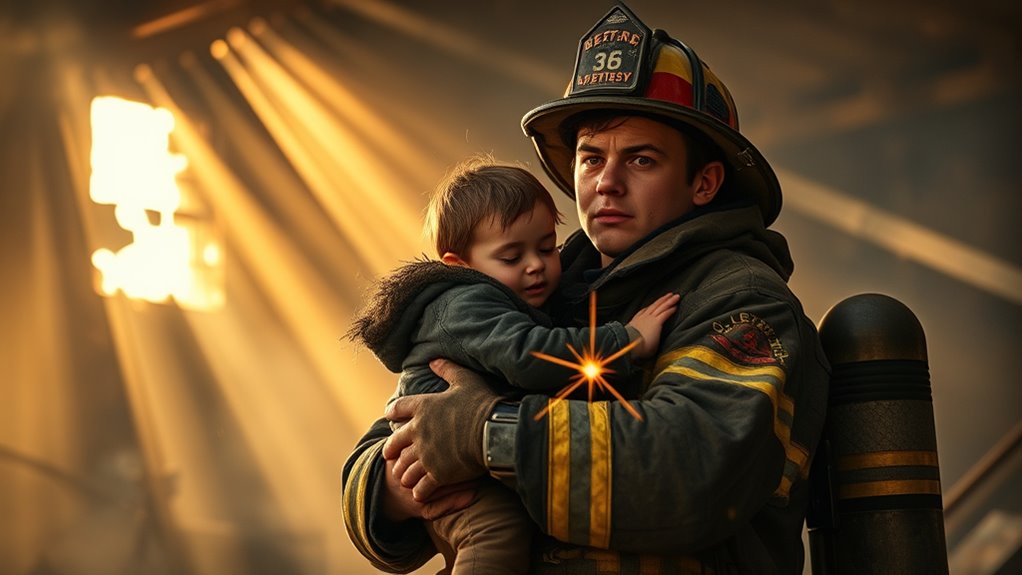
Courage often emerges in moments when it’s hardest to act, inspiring us to face fears and overcome obstacles. When you hear about heroism stories and daring feats, it’s easy to feel like such acts are reserved for extraordinary individuals. But the truth is, courage resides within all of us, waiting for the right moment to be summoned. Whether it’s risking your safety to help a stranger or standing up for what’s right against overwhelming odds, these moments reveal the power of bravery in everyday life. You don’t need superhuman strength to demonstrate courage; sometimes, all it takes is a decision to act despite fear holding you back.
Courage is within us all, ready to be summoned in everyday moments of bravery.
Think about the heroism stories that have inspired generations—people who have faced life-threatening situations with unwavering resolve. These daring feats often involve risking everything for a cause greater than themselves. When you witness someone leap into danger to save others, it’s a testament to the human spirit’s capacity to confront adversity head-on. Such acts remind you that courage isn’t the absence of fear; it’s the willingness to move forward despite it. You might not be called to heroic rescue missions, but you’re capable of small acts of bravery that ripple outward, creating a profound impact.
In your daily life, courage manifests in subtle but powerful ways. It could be speaking up in a meeting when you disagree, confronting a personal fear, or helping someone in need without hesitation. These moments might seem insignificant compared to the daring feats of heroes, but they are just as vital. Every act of kindness, honesty, or standing up for what’s right adds to a larger story of bravery. When you draw inspiration from heroism stories, remember that these acts are often born from ordinary people facing extraordinary circumstances. You can emulate that same strength, even in small ways, to change your world and those around you.
The key is to recognize that courage isn’t a one-time event reserved for special occasions. It’s a trait you develop over time, reinforced by your choices and actions. Each daring feat you undertake, whether big or small, builds resilience and confidence. So, when you’re faced with a challenge or a moment of doubt, recall these stories of heroism and daring feats. Allow their examples to ignite your inner strength. Because, ultimately, the most inspiring acts of courage are those you summon in your own life, proving that bravery isn’t just for stories—it’s for real, everyday moments. Recognizing the potential for personal debt forgiveness bills can sometimes require courage to navigate complex financial options and advocate for oneself.

A Year of Positive Thinking: Daily Inspiration, Wisdom, and Courage, A Guide to Transforming Your Mindset (A Year of Daily Reflections)
As an affiliate, we earn on qualifying purchases.
As an affiliate, we earn on qualifying purchases.
Frequently Asked Questions
How Do I Recognize When an Act of Courage Is Needed?
You recognize when an act of courage is needed during moral dilemmas where values clash or injustice occurs. Pay attention to situations that require risk assessment, especially when standing up might threaten your safety or reputation. If you feel a strong inner nudge to act despite fears, it’s a sign you’re facing a moment calling for courage. Trust your instincts and weigh the potential impact before choosing to act bravely.
Can Small Acts of Bravery Be Considered Inspiring?
Yes, small acts of bravery can definitely be considered inspiring. Your everyday heroism, like offering a kind word or standing up for someone, shows quiet bravery that resonates with others. These acts may seem minor, but they often have a ripple effect, encouraging those around you to act courageously in their own lives. Remember, true inspiration often comes from consistent, humble acts of courage that reflect your inner strength.
What Are Common Fears Faced During Courageous Acts?
As you step forward into the unknown, you often face fears like risk aversion and peer pressure, which can feel like icy winds pushing you back. The fear of failure, judgment, or standing alone in the storm clouds of doubt can threaten your resolve. These common fears test your courage, making each daring act a powerful reminder that overcoming internal hurdles is just as crucial as facing external dangers.
How Do Cultural Differences Influence Perceptions of Courage?
Cultural differences shape how you perceive courage, as cultural honor often influences what’s considered brave. In some cultures, bravery stereotypes emphasize collective strength and sacrifice, while others value individual risk-taking. These beliefs can lead you to view acts differently based on your cultural background, impacting what you see as courageous. Understanding these nuances helps you appreciate diverse acts of bravery beyond your own cultural lens, fostering greater respect and empathy.
Are There Psychological Benefits to Performing Courageous Acts?
Yes, performing courageous acts can boost your mental resilience and promote emotional growth. When you face fears or challenges, you build confidence and strengthen your ability to handle future adversity. Courageous actions help you develop a positive mindset, reduce anxiety, and enhance self-esteem. By stepping outside your comfort zone, you foster resilience and emotional maturity, making you better equipped to navigate life’s ups and downs with strength and optimism.

Acts of Kindness Journal for Kids: A Daily Kindness Challenge Workbook to Build Confidence, Empathy, Gratitude and Positive Character | Includes … Deeds Tracker, and Weekly Goals (Ages 6-12)
As an affiliate, we earn on qualifying purchases.
As an affiliate, we earn on qualifying purchases.
Conclusion
Remember, courage isn’t the absence of fear but acting despite it. As you face your own challenges, think of those who stepped into the unknown with unwavering resolve—ordinary people doing extraordinary things. Their bravery shines brightest in moments of doubt, reminding you that even in darkness, a spark of courage can ignite hope. So, embrace your fears, take that leap, and let your acts of bravery inspire others just as these stories inspire you.

Resilient Warriors (Resilence Trilogy)
Used Book in Good Condition
As an affiliate, we earn on qualifying purchases.
As an affiliate, we earn on qualifying purchases.

Inspirational Wall Art Co. – Bravery – Firefighter American Firetruck Courage Boys Engine Patriotic Department Motivational Gift Quotes Posters Print Home Office Decor 11X14 inches
This 11×14 inch Firefighter poster is for those who want to display a cool piece of firefighter artwork….
As an affiliate, we earn on qualifying purchases.
As an affiliate, we earn on qualifying purchases.