
TL;DR

Turn your wind-down time into listening time
- Thousands of audiobooks, podcasts and originals
- Listen on your phone, tablet or Echo — also offline
- Cancel anytime
Flinders University researchers have identified properties in vanillin that could be useful in developing materials for wound care and drug delivery. The findings point to research potential, not a proven treatment: safety and effectiveness in patients remain to be established through further development and clinical testing.
Flinders University researchers have identified antioxidant, anti-inflammatory and antibacterial properties in vanillin, the compound associated with vanilla’s familiar flavor and aroma, and say it could help inform future materials for chronic wound care and drug delivery. The work describes a potential research direction, not a treatment shown to work in patients; further development and clinical testing are needed.
The researchers, from Flinders’ Biomedical Nanoengineering Laboratory, examined how vanillin’s chemical properties might be used in medical formulations. Their work focuses on the possibility of combining several functions relevant to wounds, including addressing oxidative stress, inflammation and bacterial contamination. These factors can complicate the healing of chronic wounds and ulcers, but the supplied report does not establish that a vanillin-based product improves healing in people.
Vanillin can act as a dynamic crosslinker, helping connect components in a material. The researchers say this feature may be useful in designing formulations that protect wounds, support tissue repair or carry medicines. They also point to its potential role in delivering hydrophobic compounds, which do not dissolve easily in water and can be challenging to formulate. These are proposed applications; the report does not describe a tested product or clinical results.
Professor Krasimir Vasilev, who leads the laboratory and is a professor of biomedical nanotechnology at Flinders, said vanillin’s widespread use and chemical stability could be relevant to medical applications. He and his colleagues also describe synthetic vanillin as abundant and cost-effective. Those practical qualities may help with future manufacturing, but they do not establish that a formulation is safe, effective or ready for commercial use.
Potential Uses in Wound Care
Chronic wounds and ulcers can be difficult to manage when inflammation, bacteria and oxidative stress are present. A material that could address more than one of these factors might give researchers a way to explore multifunctional wound-care products, rather than formulations aimed at only one issue. The study’s significance at this stage is that it identifies a familiar, readily available compound as a possible component for such research.
Vanillin’s potential role in carrying some medicines may also be relevant to formulation science. If further studies support the researchers’ proposal, its chemical interactions could help create materials that deliver poorly water-soluble compounds. But no patient benefit, treatment outcome or clinical effectiveness is reported here. Readers should distinguish early research potential from an available medical option.
The compound’s availability could be useful if a workable formulation is eventually developed: synthetic vanillin can be made in large quantities, according to the source report. Even so, affordable supply is only one part of turning a laboratory concept into healthcare use. Testing, product development and evidence of safety and effectiveness would also be required.
As an affiliate, we earn on qualifying purchases.
From Food Ingredients to Medical Materials
The vanillin work fits into a wider effort at Flinders University to investigate whether compounds found in familiar food ingredients can serve as components in medical materials. The supplied report describes a related project on peppermint-oil coatings, published by the team in the journal Small in February 2026. That coating was designed to address bacteria, inflammation and oxidative stress while remaining compatible with human tissue.
In that earlier project, researchers explored nanoscale coatings and plasma processing, a way to modify material surfaces. The peppermint work provided a precedent for investigating how biologically active compounds might be incorporated into medical products. The current report says the team is extending that broader approach to vanillin; it does not state that the peppermint coating has become an approved treatment.
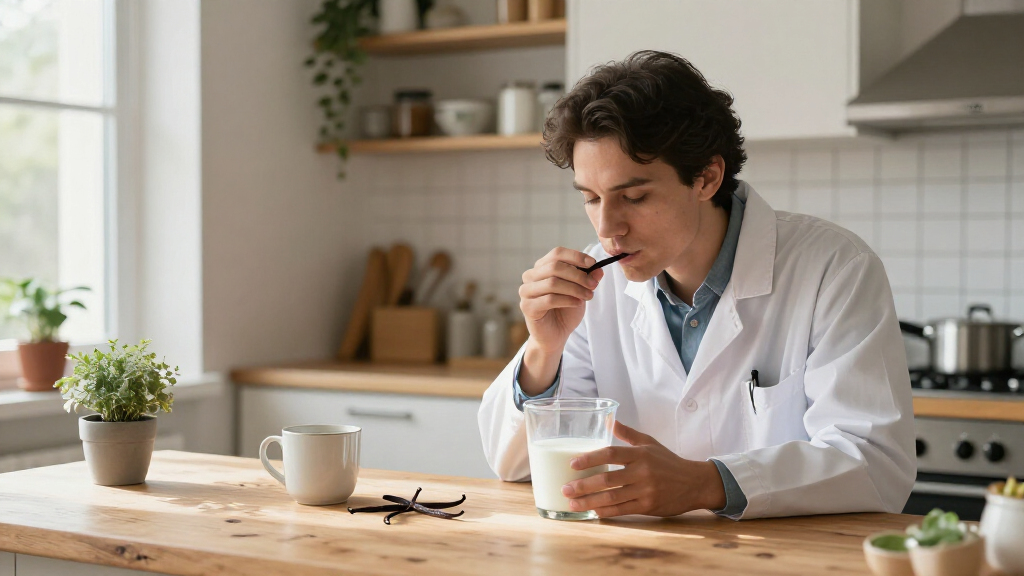
Vanillin is the main flavor and fragrance compound in natural vanilla pods and can also be manufactured synthetically from materials such as clove oil or rice, according to the source. Its established use in food provides a history of use in that setting, but food use does not by itself prove safety for a particular wound-care formulation or route of medical use.
“Vanillin is among the most widely used flavor compounds in the global food system, valued for its sensory attributes, chemical stability and long history of safety — and that can be transferred to other areas, such as medical uses.”
— Professor Krasimir Vasilev, Flinders University
antioxidant antibacterial wound dressings
As an affiliate, we earn on qualifying purchases.
As an affiliate, we earn on qualifying purchases.
Clinical Evidence Still Needed
The report does not specify the full experimental methods, the size or design of the study, or whether the findings came from laboratory tests, animal studies or another research setting. It also gives no patient data, clinical outcomes, dosage, formulation details or timeline for testing. Those gaps make it impossible to assess from the supplied information how well vanillin-based materials might perform in actual wound care.
The researchers’ descriptions of possible safety, ulcer treatment and targeted delivery remain prospective claims. Vanillin’s familiarity as a flavor compound cannot establish how it will behave when applied to damaged tissue or incorporated into a medical product. The source says further development and clinical testing are needed before effectiveness and safety for patients can be established.
drug delivery formulations vanillin
As an affiliate, we earn on qualifying purchases.
As an affiliate, we earn on qualifying purchases.
Further Formulation and Testing
The immediate next steps are further development of vanillin-based formulations and testing of their properties for potential wound-care or drug-delivery use. The report does not give a schedule, name a clinical trial, or say that a product is moving toward regulatory review. It is also unclear which application the researchers will prioritize.
Any future move toward patient use would require evidence specific to the formulation, including appropriate safety and effectiveness testing. Until such evidence is available, vanillin should be understood as a subject of medical-materials research, not an established treatment for chronic wounds or ulcers.
As an affiliate, we earn on qualifying purchases.
Key Questions
What did Flinders University researchers find about vanillin?
They reported that vanillin has antioxidant, anti-inflammatory and antibacterial properties that could be relevant to developing wound-care materials and drug-delivery formulations. The report does not establish a clinical treatment benefit.
Does this mean vanilla can treat chronic wounds?
No. The findings describe research potential, not a proven treatment. The source says vanillin-based products require further development and clinical testing before their safety and effectiveness in patients can be established.
Why are researchers interested in vanillin for medicine?
The researchers point to its chemical properties, including the ability to act as a dynamic crosslinker, and its potential interactions with materials and some compounds that do not dissolve easily in water. They also cite synthetic vanillin’s availability and cost as practical considerations.
What remains unknown about the research?
The supplied report does not provide detailed methods, clinical results, a tested formulation, or a timeline for further work. It remains unclear how a vanillin-based product would perform in patients or whether one will proceed to clinical testing.
Source: rss
Columbus Day / Indigenous Peoples' Day Picks
long weekend sales
As an affiliate, we earn on qualifying purchases.