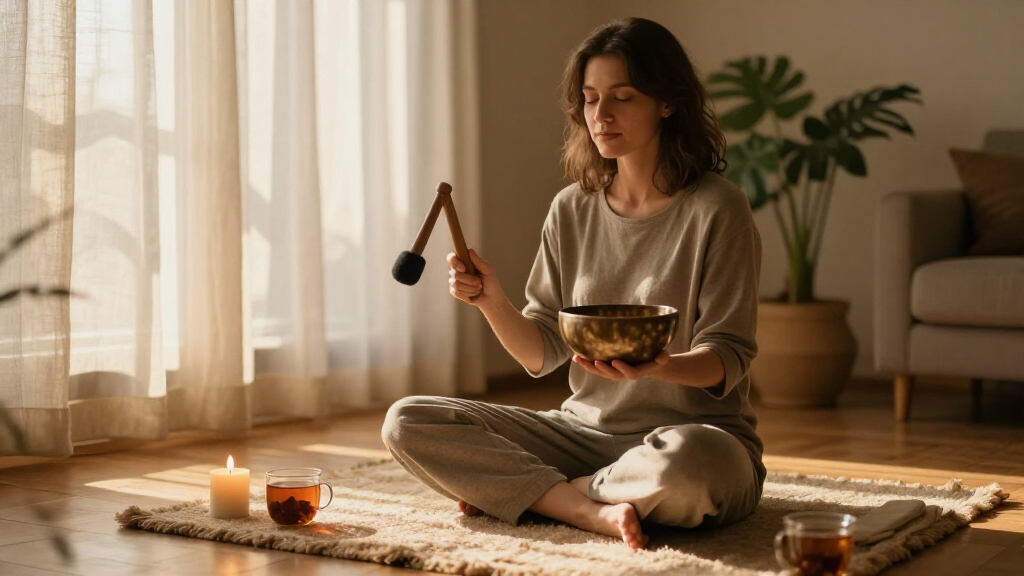

Almost nobody subscribes to both Calm and Headspace. They cost roughly the same, occupy the same shelf in the app store, and promise overlapping benefits — less stress, better sleep, a calmer head. That makes this a genuine either/or decision rather than a ‘stack them both’ situation, and it forces a question most comparison shoppers gloss over: what do you actually want from a relaxation tool? If your answer is help falling asleep and something soothing to play in the background of a stressful day, Calm and Headspace are not remotely the same product. If your answer is teach me to meditate properly so I build a durable skill, they flip in the other direction. Calm is a library — vast, atmospheric, and broad, with famous voices reading bedtime stories and hours of ambient soundscapes. Headspace is a curriculum — narrower, more disciplined, and much better at turning a complete beginner into someone who actually knows how to meditate. This guide compares them head-to-head across the criteria that actually drive the decision: instruction quality, sleep support, content breadth, ease of sticking with it, price and value, and free-tier usefulness. By the end, you should know which one fits your specific situation, because the honest answer here is that the right choice depends heavily on whether you are shopping for a sleep aid or a mental training program — but there are clear winners on each side of that line.

Turn your wind-down time into listening time
- Thousands of audiobooks, podcasts and originals
- Listen on your phone, tablet or Echo — also offline
- Cancel anytime

MindSculpt Fidget Putty Set with 52 Guided Calming Exercise Cards
- ✔ ASIN: B0GHBZ7621
- ✔ Includes: 2 silicone putty tubs, 52 mindfulness cards, premium storage box
- ✔ Putty weight per tub: 3 oz

Reflect Orb Smart Biofeedback Device for Stress Relief, Mindfulness & Anxiety
- ✔ ASIN: B0C6V2KDBR
- ✔ Tracking: Real-time heart rate and skin conductance
- ✔ Feedback: Changing light patterns

InterBreath Guided Breathing Device – 4 Modes for Stress Relief, Mindfulness, Sleep & Focus
- ✔ ASIN: B0H1NVJ5D3
- ✔ Color: Purple
- ✔ Breathing Modes: 4 (4-6 Basic, 4-4-6 Advanced, 4-7-8 Deep, 2-4 Quick Adjustment)
At a Glance
| Criteria | Calm | Headspace | Winner |
|---|---|---|---|
| Meditation instruction quality | Large library but less structured; guided sessions vary in teaching depth | Structured courses (Basics and beyond) with genuine skill progression | B |
| Sleep and bedtime support | Best-in-class: Sleep Stories, soundscapes, wind-down sessions | Good: sleepcasts and wind-downs, smaller and more functional | A |
| Content breadth | Enormous: music, celebrity readings, breathing exercises, video lessons | Narrower and more focused; almost everything is meditation-driven | A |
| Beginner onboarding | Very easy to start; no learning curve to hit play on something relaxing | Excellent: guided Basics course teaches technique step by step | Depends |
| Sticking with it long-term | Depends on self-direction; easy to drift into passive listening | Streaks, move mode, and course structure encourage habit building | B |
| Free tier | Limited rotating content; most Sleep Stories locked | Small but includes the start of the Basics course | B |
| Price and value | Annual plan typically ~$70; frequent heavy discounts | Annual plan typically ~$70; discounts less aggressive | Depends |
MindSculpt Fidget Putty Set with 52 Guided Calming Exercise Cards
The MindSculpt Fidget Putty Set takes our top spot because it solves the most common problem with stress relief tools: sustaining the habit. A tub of putty alone is a five-minute distraction; pairing it with 52 guided mind and body exercise cards turns it into a structured mindfulness practice that blends somatic, visualization, and creative exercises. That structure is what separates it from generic fidget products and makes it genuinely useful for focus and decompression rather than idle fidgeting.Compared with the Reflect Orb, the putty set is radically simpler — no app, no charging, no membership — and its two textures (super soft and medium silicone) let users match the putty to their sensory preference. Where the Orb offers measurable data, MindSculpt offers tactile engagement, which for many people is a faster route to calming an agitated nervous system. It is also the only pick here rated for kids 7 and up, making it viable for classrooms, family nights, and therapy settings where the two wearables would be overkill.The tradeoffs are real but manageable. The putty has a slightly sticky feel that sensory-sensitive users may dislike, and it asks for hand washing before and after use — a small friction point, but one that matters in shared or classroom environments. Still, because the silicone never dries out, this is a one-time purchase with no recurring costs, which neither digital option can claim.
Pros:
- Never-drying silicone putty delivers long-term value with no consumables
- 52 guided cards add real structure, blending somatic, visualization, and fun exercises
- Non-toxic and ASTM compliant, safe for kids 7 and up
- Versatile across solo, family, classroom, and office settings
- No app, charging, or subscription required
Cons:
- Slightly sticky texture may bother sensory-sensitive users
- Requires hand washing before and after each use
Best for: Families, classrooms, and office workers who want a screen-free, subscription-free stress relief tool that works for multiple ages
Not ideal for: People who want measurable progress data or discreet use in meetings — the putty is hands-on and visible by design
Bottom line: The most versatile and lowest-cost-to-own pick in this lineup, ideal for anyone who calms down through their hands.
“The most versatile and lowest-cost-to-own pick in this lineup, ideal for anyone who calms down through their hands.”
Reflect Orb Smart Biofeedback Device for Stress Relief, Mindfulness & Anxiety
The Reflect Orb is the most technologically ambitious tool in this comparison, and the only one that actually measures your stress response. By tracking heart rate and skin conductance in real time, it translates changing light patterns into immediate feedback, letting you see — quite literally — whether your breathing is moving you toward calm. For data-driven users, this closed feedback loop is far more compelling than following a scripted exercise, because it proves what works for your body specifically.Where the MindSculpt set offers analog simplicity, the Orb offers precision, and where the InterBreath guides rhythm blindly, the Orb confirms whether that rhythm is working. Its up-to-two-week battery life and phone-free operation after initial setup make it genuinely practical: once configured with the iOS or Android app, it lives on a nightstand or desk and works on demand without your phone nearby.The catch is the membership model. One year of premium app access is included, but guided breathing, meditation, and session insights sit behind a paid renewal after that. Importantly, the core light biofeedback keeps functioning without a subscription, so the essential stress relief feature is not hostage to recurring fees — but buyers should understand the tiered experience before committing. It is also the least kid-friendly option here and the most involved to get started, requiring smartphone setup that the putty set skips entirely.
Pros:
- Real-time biofeedback from heart rate and skin conductance tracking
- Works independently of your phone after one-time setup
- Long battery life of up to two weeks per charge
- Core light biofeedback continues without a paid membership
Cons:
- Premium guided content and insights require a paid membership after the first year
- Requires initial smartphone setup before first use
- The most expensive-feeling commitment in the lineup given subscription potential
Best for: Adults who want measurable, evidence-based feedback on their stress levels and don’t mind a premium device with optional subscription content
Not ideal for: Buyers who dislike subscription ecosystems or want something children can use independently
Bottom line: The most sophisticated option here — choose it if seeing your body’s stress response in real time would motivate your practice.
“The most sophisticated option here — choose it if seeing your body’s stress response in real time would motivate your practice.”
InterBreath Guided Breathing Device – 4 Modes for Stress Relief, Mindfulness, Sleep & Focus
The InterBreath fills a gap the other two picks cannot: discreet, wearable stress relief in shared spaces. Worn on the wrist, it guides breathing through gentle tactile pulses — a long pulse for inhale, a short pulse for the hold, a quiet pause for the exhale — so there is no screen to watch, no sound to hear, and nothing to hold. In an office meeting or a classroom, nobody around you will notice it working, which is precisely why it beats the putty set (visible, hands-busy) and the Orb (desk-bound light display) for on-the-go anxiety moments.Its four breathing modes cover the practical spectrum: a 4-6 basic pattern for everyday calming, a 4-4-6 advanced rhythm, a 4-7-8 deep pattern for sleep, and a 2-4 quick adjustment for mid-day resets. One-button operation and automatic session ending keep friction low, and the indicator light shuts off after mode selection so it stays unobtrusive even in the dark. Wireless charging rounds out a genuinely thoughtful design.The honest limitation: unlike the Reflect Orb, the InterBreath gives you no feedback on whether the breathing is working — it guides, but it does not measure. And there is a learning curve to decoding the pulse rhythm before the guidance feels intuitive, which contrasts with MindSculpt’s pick-up-and-squeeze immediacy. Users who prefer visual or audio-guided sessions may find the purely tactile approach unfamiliar at first. As a focused, affordable-feeling, travel-friendly companion, however, it earns its place.
Pros:
- Tactile pulse guidance means no counting seconds or staring at screens
- Four modes cover stress relief, focus, deep relaxation, and sleep
- Quiet, discreet design works in offices, classrooms, and while traveling
- One-button operation, automatic session end, and wireless charging
Cons:
- Requires learning the pulse rhythm before it feels intuitive
- No biofeedback or progress tracking, unlike the Reflect Orb
- Not suited to users who prefer visual or audio guidance
Best for: Commute warriors, office workers, and students who need quiet, in-the-moment stress relief without drawing attention
Not ideal for: Users who want data, measurable progress, or visual/audio-guided meditation sessions
Bottom line: The most portable and least conspicuous way to do structured breathing — a smart pick for public-space stress relief.
“The most portable and least conspicuous way to do structured breathing — a smart pick for public-space stress relief.”
As an Amazon Associate we earn from qualifying purchases.
Key Differences
The single biggest difference is posture toward the user. Headspace treats you as a student: it wants to teach you a skill, and almost every design choice — sequential courses, a structured Basics program, animations explaining what mindfulness actually is — serves that goal. Calm treats you as a guest: it wants to make you feel better right now, and its enormous library of Sleep Stories, soundscapes, music, and celebrity-narrated content is built for immediate soothing rather than cumulative learning. Neither posture is wrong, but they lead to very different day-30 experiences. A Headspace user can typically sit down and meditate unguided with reasonable technique; a Calm user has usually slept better and feels less frazzled but hasn’t necessarily built a meditation practice.
The second meaningful difference is what happens when you open the app tired and unmotivated. Calm shines here: hitting play on a rain soundscape or a Sleep Story requires zero commitment, which is exactly what makes it sticky for evening use. Headspace asks for slightly more engagement — a session has a beginning, middle, and end — but rewards it with streaks and a visible sense of progress. This is why Calm tends to win for nighttime routines and Headspace tends to win for morning routines; the apps even feel physically different to use at those times of day.
Finally, there is a breadth-versus-depth tradeoff that shows up in everything from search results to recommendations. Calm’s library is genuinely huge, which is great until you find yourself scrolling past content you will never touch. Headspace’s library is smaller and more opinionated, which feels limiting to experienced users but keeps beginners from getting lost. For most people making this decision, sleep versus skill is the fork in the road — and the rest of this comparison flows from it.
Detailed Comparison
Meditation instruction quality (Headspace wins — major)
Headspace wins clearly, and the gap is major. Its Basics course is one of the best introductions to meditation available anywhere, free or paid: sequential sessions that build on each other, clear explanations of what your attention should be doing, and a progression path from ten-minute beginner sessions to advanced technique. Calm’s guided meditations are pleasant and often well-produced — the Daily Calm is a solid ten-minute habit — but the library is not designed as a curriculum. Sessions vary in teaching depth, and nothing systematically corrects the common beginner mistakes (chasing relaxation instead of observing the mind, judging a session as ‘failed’). In practice: if you want to understand meditation as a skill, Headspace is the teacher and Calm is the ambience.
Sleep and bedtime support (Calm wins — major)
Calm wins, and for many buyers this alone decides the purchase. Sleep Stories — bedtime stories for adults, narrated by recognizable voices — are Calm’s signature feature and genuinely effective as a wind-down tool for people whose minds race at night. Layer on extensive soundscapes, sleep music, and breathing exercises, and Calm functions as a complete bedtime environment. Headspace’s sleepcasts and wind-down sessions are competent and thoughtfully designed, but the sleep section feels like a well-made annex rather than the main building. If falling asleep is your primary problem, this is not a close comparison.
Content breadth (Calm wins — moderate)
Calm wins on sheer volume: it has far more total hours across far more categories — music, nature scenes, video lessons on movement and stretching, celebrity readings, kids’ content. Whether breadth is a benefit depends on you. If you want one app that covers sleep, daytime calm, focus sounds, and family content, Calm’s library justifies its price more easily. Headspace is narrower by design, but within its lane (mindfulness training, focus sessions, stress and anxiety courses, move mode) the quality per hour is consistently high. For buyers who value focus over abundance, Headspace’s tighter library is arguably a feature — but on raw range, Calm takes it. The gap is moderate: breadth matters more to some users than others.
Beginner onboarding (moderate difference)
This one genuinely depends on what kind of beginner you are. If you are intimidated by meditation itself, Headspace’s structured onboarding is superior — it removes every ‘am I doing this right?’ question in the first week. If you are simply stressed and want relief tonight without committing to learning anything, Calm’s zero-friction start wins: press play, feel calmer, done. Both apps do their own kind of beginner well; the loser is the buyer who picks the wrong one for their temperament. Someone expecting to be taught who lands in Calm may feel adrift; someone expecting instant relief who lands in Headspace may find the early sessions too much like homework.
Sticking with it long-term (Headspace wins — moderate)
Headspace wins on retention mechanics. Streak tracking, progressive courses, and a visible sense of advancement give you the psychological scaffolding that turns a three-week experiment into a year-long habit. Calm’s open library is more flexible but more passive — many users drift into only playing soundscapes, which is fine for relaxation but forfeits the skill-building half of the app’s promise. In practice, people who want a durable daily practice stick with Headspace longer; people who use the app as an evening wind-down tool stick with Calm just as long, but for a different reason. The gap for habit-building purposes is moderate and real.
Free tier (Headspace wins — minor)
Both free tiers are limited, but Headspace’s is slightly more useful because it lets you begin the actual Basics course — the single best thing either app offers a newcomer — before paying. Calm’s free content rotates and includes a taste of meditations and sounds, but the flagship Sleep Stories are almost entirely locked, which means you cannot properly test the feature most likely to sell you the subscription. Neither free tier is generous. Treat both as previews, not products. Headspace wins by a minor margin.
Price and value (moderate difference)
Both apps sit around the same annual price point (roughly $70/year, with lifetime deals occasionally offered), so the comparison is about what you get for the money rather than what you pay. Calm’s value case rests on breadth: if you will use the sleep content, the music, and the soundscapes, you are extracting a lot from one subscription. Headspace’s value case rests on depth: if you complete its courses, you carry a genuine skill out the other side, which outlasts any subscription. Calm runs steeper and more frequent discounts, so bargain hunters will usually find it cheaper in practice — sometimes dramatically so. Neither is overpriced for a heavy user; both are poor value for someone who will open the app four times a year. Call it a tie with a bargain-hunter edge to Calm.
Calm: Pros and Cons
Pros:
- Best-in-class sleep support: Sleep Stories and soundscapes genuinely help with falling asleep
- Enormous, varied library covering sleep, focus, music, movement, and kids’ content
- Zero learning curve — relief is one press of play away, even on bad days
- Regular aggressive discounts and lifetime deals make it cheap to acquire
Cons:
- Meditation instruction lacks structure; sessions vary in teaching quality
- Easy to use passively and never build an actual practice
- Huge library can feel overwhelming and padded for focused users
- Flagship sleep content is locked behind the paywall, limiting the free trial of its best feature
Headspace: Pros and Cons
Pros:
- Outstanding structured instruction — the Basics course is a genuinely excellent meditation teacher
- Strong habit mechanics: streaks and course progression support long-term consistency
- Tight, curated library keeps beginners from getting lost
- Free tier lets you start the flagship course before paying
Cons:
- Sleep tools are functional but far less developed than Calm’s
- Smaller library with less variety for casual browsing
- Requires more engagement — can feel like homework when you are exhausted
- Discounts are rarer, so the real price paid is usually higher than Calm’s
Who Should Choose What
Choose Calm if:
- Your main problem is falling asleep or winding down at night — Calm’s sleep content is the category benchmark
- You want background relief (soundscapes, music) rather than a skill to learn
- You want one subscription to cover relaxation for yourself and content for children
- You are a deal hunter — Calm’s frequent steep discounts make it the cheaper acquisition most of the year
Choose Headspace if:
- You want to actually learn meditation as a durable skill, not just feel calm tonight
- You thrive on structure, courses, and streaks — accountability keeps you consistent
- You plan a morning practice routine rather than a bedtime wind-down
- You are a complete beginner who feels intimidated by meditation and wants clear instruction
Skip both if: Your stress has a concrete external cause (overwork, caregiving, financial strain) that an app cannot address — therapy, boundary-setting, or practical change will do more than any subscription, and an app should be a supplement rather than a substitute.
Value for Money
At nearly identical sticker prices, value comes down to usage pattern, and the honest answer is that both apps are excellent value for a daily user and poor value for a casual one. A year of Headspace costs about the same as two or three therapy sessions and, if you complete its courses, leaves you with a meditation skill you keep after cancelling — the strongest long-term value proposition of either app. A year of Calm costs the same on paper but usually less in practice, because Calm discounts heavily and its lifetime deals appear regularly; if you can grab one, Calm becomes an unusually cheap permanent bedtime toolkit. The mistake to avoid is paying Headspace prices for Calm-style passive listening, or buying Calm and feeling vaguely guilty you never finished a course you were never going to take. Pay for the app that matches what you will actually open at 10 p.m. or 7 a.m. — whichever hour is your real problem.
Final Verdict
Choose Headspace if your goal is to build a meditation practice: it is the better teacher, the better habit-builder, and the only one of the two that leaves you with a skill rather than a dependency on content. Choose Calm if your goal is relief, especially at night: nothing in Headspace matches its sleep library, and its sheer breadth plus aggressive discounts make it the better-value purchase for a relaxation-focused user. For the large group of buyers whose primary complaint is ‘I can’t sleep and I’m stressed,’ Calm is the better default — immediate relief beats a curriculum you may never start. For buyers who have already decided they want to learn mindfulness properly, Headspace is not just better, it is the category standard. The single deciding factor is intent: skill or soothing. Answer that one question and the decision makes itself.
Frequently Asked Questions
Is Calm or Headspace better for beginners?
It depends on the beginner. Headspace is better if you want to be taught meditation step by step — its Basics course is built exactly for that. Calm is better if you find structured courses intimidating and just want immediate, low-commitment relief. Beginners who pick the wrong style for their temperament tend to abandon the app within a month, so match the app to how you like to learn.
Which app is better for insomnia and falling asleep?
Calm, by a wide margin. Sleep Stories, extensive soundscapes, and dedicated wind-down content make it a full bedtime environment. Headspace’s sleepcasts are decent but its sleep section is a supporting feature rather than the main event. If sleep is your primary problem, this difference alone should decide the purchase.
Can I get similar benefits for free instead of subscribing?
Partially. Free YouTube meditation guides, free sleep-story podcasts, and timer apps can cover much of the ground. What you lose is curation, progression, and convenience — Headspace’s structured courses and Calm’s polished sleep library are the actual products. Try a free option for two weeks first; if you use it consistently, the paid app is probably worth it for you.
Do Calm and Headspace discounts make either one meaningfully cheaper?
Yes — Calm in particular. Both apps list similar annual prices, but Calm runs frequent steep promotions and occasional lifetime deals, meaning the price actually paid is often well below the sticker. Headspace discounts less aggressively. If price is close to decisive for you, wait for a Calm promotion or check for a Headspace student or bundle offer before paying full rate.
Can I use both apps together?
You can, but most people shouldn’t pay for both. A reasonable free compromise is a paid Headspace subscription for morning practice plus Calm’s free soundscapes or a free sleep podcast at night. If sleep problems and skill-building are both serious priorities for you and budget is not a constraint, the combination genuinely works — but it is the exception, not the sensible default.
Fall Picks
fall essentials
As an affiliate, we earn on qualifying purchases.