
Restorative yoga helps you relax deeply by calming your nervous system and easing stress through supported poses and gentle stretches. It encourages mindful breathing and meditation, allowing you to quiet your mind and release tension. As you hold poses longer, you’ll notice improved circulation, flexibility, and emotional resilience over time. This holistic approach nurtures both your mental and physical well-being, leading to a renewed sense of calm. Keep exploring how these practices can transform your relaxation routine.

Get self-care and calm essentials delivered free — and shop member deals
- Fast, free delivery on millions of items
- Access to Prime Big Deal Days deals on October 6–7
- Prime Video, Amazon Music and more included
Key Takeaways
- Restorative yoga promotes deep relaxation by using supported poses and gentle stretches to ease tension and calm the nervous system.
- Breathing techniques like diaphragmatic and mindful breathing help activate relaxation responses and reduce stress hormones.
- Meditation practices in restorative yoga foster mental clarity, emotional resilience, and present-moment awareness.
- Longer hold times in supported poses enhance circulation, flexibility, and release of emotional and physical fatigue.
- Combining breathing, meditation, and supported poses creates a holistic approach that nurtures long-term mental and physical well-being.
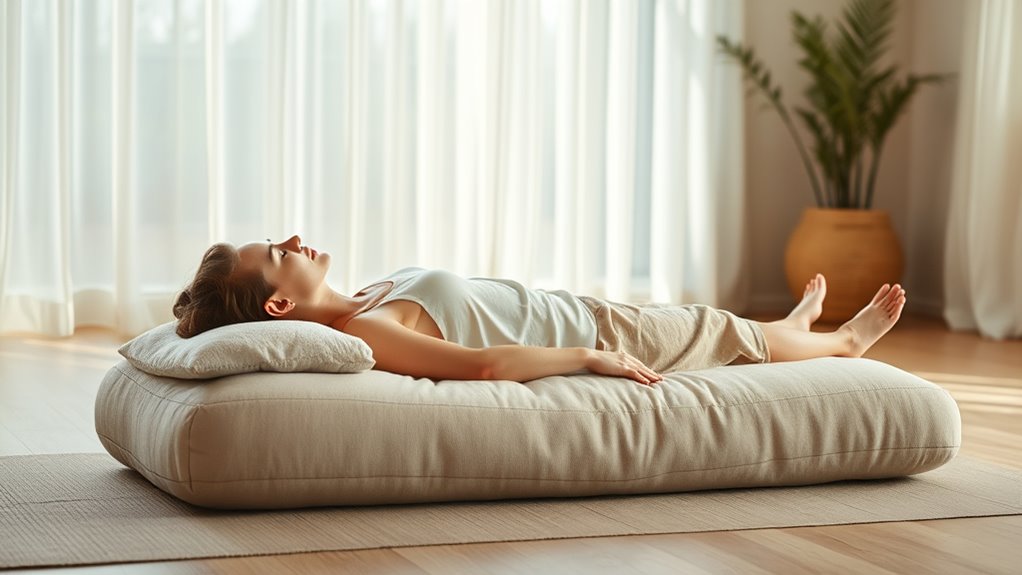
Restorative yoga is a gentle practice designed to promote deep relaxation and stress relief. It focuses on calming your nervous system and helping you unwind from daily pressures. One of the key elements that make restorative yoga so effective is your use of breathing techniques. By consciously slowing down your breath, you signal your body to relax. Deep, diaphragmatic breathing helps reduce cortisol levels, easing tension in your muscles and mind. As you settle into each pose, you’ll be encouraged to pay close attention to your breath, making it a central part of your practice. This mindful breathing creates a meditative quality that deepens your sense of calm and presence.
Restorative yoga uses mindful breathing to relax your body and calm your mind.
In addition to breathing techniques, meditation practices play a crucial role in restorative yoga. During your session, you’re guided to focus inward, observing your thoughts without judgment. This meditative approach helps quiet the mental chatter that often fuels stress and anxiety. As you hold gentle poses supported by props, your mind naturally gravitates toward stillness, allowing you to experience a profound sense of peace. Meditation in restorative yoga isn’t about achieving a blank mind but about cultivating awareness and acceptance of your present moment. This practice enhances your ability to stay centered, both on and off the mat. Incorporating mindful awareness into your routine can deepen your relaxation and emotional resilience.
As you breathe more intentionally and engage in meditation practices, you’ll notice your body begins to release built-up tension. Restorative yoga encourages you to stay in each pose longer, sometimes for several minutes, which amplifies the relaxation response. During this time, your focus on breathing and mindfulness helps dissolve stress and emotional fatigue. The gentle stretches and supported poses also promote improved circulation and flexibility, making your body feel lighter and more refreshed.
The combination of breathing techniques and meditation practices in restorative yoga creates a holistic approach to relaxation. You’re not just stretching or holding poses; you’re cultivating a state of mindful awareness that extends beyond your practice. Over time, these techniques can help you develop a calmer, more resilient mindset, better equipped to handle life’s challenges. By committing to regular restorative yoga sessions, you give yourself permission to pause, breathe deeply, and reconnect with your inner calm. It’s a simple yet powerful way to nurture your mental and physical well-being, leaving you feeling renewed and more balanced with each practice.
As an affiliate, we earn on qualifying purchases.
Frequently Asked Questions
Can Restorative Yoga Help With Chronic Pain?
Yes, restorative yoga can help with chronic pain by promoting mindfulness benefits and stress reduction. As you gently hold poses, you’ll focus on your breath and body, which helps calm your nervous system. This relaxation decreases muscle tension and reduces pain perception over time. Consistent practice encourages a more mindful attitude toward your body and pain, making it easier to manage discomfort and improve your overall well-being.
Is Restorative Yoga Suitable for Beginners?
Yes, restorative yoga is suitable for beginners. You’ll find it very beginner-friendly, focusing on gentle stretching and supported poses that help you relax without strain. You can start with simple poses like supported reclined twist or legs-up-the-wall. These poses are designed to be accessible, allowing you to ease into relaxation and improve flexibility gradually. Restorative yoga is perfect if you’re new to yoga or seeking a gentle way to unwind.
How Often Should I Practice Restorative Yoga?
Think of your body as a delicate garden needing gentle tending. You should practice restorative yoga 2-3 times a week, allowing your garden to flourish without overwatering. For ideal scheduling, choose times when your mind is calm—early mornings or evenings—to nurture deep relaxation. Consistency is key; like tending plants, regular practice helps your body and mind grow stronger and more resilient over time.
What Equipment Do I Need for Restorative Yoga?
For restorative yoga, you’ll need props like bolsters, blankets, blocks, and eye pillows to support your body comfortably. These props help you stay in poses longer and deepen your meditation focus. You might also want a yoga mat for cushioning. With the right props, you’ll find it easier to relax fully, allowing your mind to settle and enhancing your restorative experience.
Can Restorative Yoga Improve Sleep Quality?
You can definitely improve your sleep quality with restorative yoga. While your mind races at night, practicing mindful breathing and gentle stretches helps calm your nervous system, making it easier to drift off. This slow, relaxing practice reduces stress and tension, creating a peaceful passage into sleep. By incorporating restorative yoga into your routine, you nurture both your body and mind, leading to more restful, rejuvenating nights.
meditation cushions for relaxation
As an affiliate, we earn on qualifying purchases.
As an affiliate, we earn on qualifying purchases.
Conclusion
As you settle into each gentle pose, imagine your worries melting away like snowflakes under warm sunlight. Feel your body sinking into a peaceful embrace, where every breath invites calm and clarity. With each mindful inhale and exhale, picture your stress dissolving into a tranquil lake, leaving you refreshed and rejuvenated. Embrace this serene moment, knowing you’ve created space for relaxation and renewal. Let restorative yoga guide you to a calmer, more balanced you.
yoga bolster for supported poses
As an affiliate, we earn on qualifying purchases.
As an affiliate, we earn on qualifying purchases.
diaphragmatic breathing exercise tools
As an affiliate, we earn on qualifying purchases.
As an affiliate, we earn on qualifying purchases.
Halloween Picks
halloween
As an affiliate, we earn on qualifying purchases.