
Dreaming in color happens because your brain stays active during sleep, processing visual and emotional signals from your surroundings and memories. Colors in dreams aren’t just for aesthetics; they often symbolize feelings like passion, calm, or danger. Your cultural background and emotional state influence how vividly you perceive these colors. This vibrant experience reflects how deeply your perceptions and emotions intertwine, revealing more fascinating insights if you continue exploring the science and symbolism behind dream colors.
Key Takeaways
- Dreaming in color results from active visual processing in the brain, similar to waking perception.
- Colors in dreams carry emotional and symbolic meanings, reflecting inner feelings and memories.
- Cultural, environmental, and media influences shape how vividly and frequently we experience colors in dreams.
- Emotional states like stress or calmness affect the intensity and tone of dream colors.
- Dream colors enhance subconscious storytelling, helping process complex emotions and desires during sleep.

Dreaming in Color
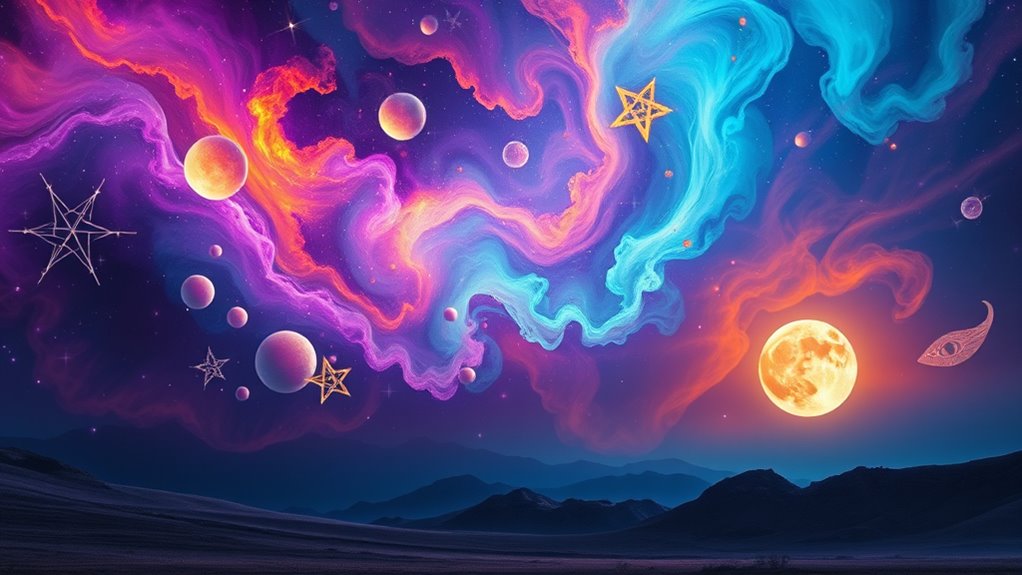
For many people, dreaming in color feels like a vivid, immersive experience that transforms nightly fantasies into striking visual stories. When you drift into sleep, your mind conjures images filled with a spectrum of hues, making your dreams feel alive and tangible. This isn’t just happenstance; it’s rooted in how your brain processes chromatic perception during dreams. Your visual system, which is highly developed during waking hours, continues to function in sleep, allowing you to see bright reds, deep blues, and glowing yellows in your dreams. These colors aren’t merely aesthetic; they carry emotional symbolism that adds depth and meaning to your subconscious narratives. For example, red might symbolize passion or danger, while blue could represent calm or sadness. The colors you experience in dreams often reflect your emotional state, acting as a silent language your mind uses to communicate complex feelings.
Your brain’s ability to perceive chromatic details during dreaming is influenced by your experiences and emotions. If you’re someone who vividly remembers the colors of your surroundings, you’re more likely to dream in full color. Conversely, some people report dreaming mainly in black and white, which may be linked to historical media influences or individual differences in visual perception. Interestingly, recent studies suggest that visual perception during sleep can also be shaped by cultural and environmental factors, further affecting dream coloration. The connection between chromatic perception and emotional symbolism underscores how your dreams are more than random images—they’re layered with emotional significance. Colors can evoke feelings or memories, making your dreams feel more meaningful and personal. When you see a lush green landscape or a fiery sunset in your dreams, your mind is tapping into these emotional symbols to evoke responses that mirror your waking feelings.
Scientists have studied how dreaming in color varies across cultures and generations, revealing that exposure to color-rich media influences how vividly you experience colors in sleep. The richness of your dream palette can also be shaped by your emotional life—heightened stress might lead to more intense, vivid colors, while calm periods tend to produce softer, muted tones. Your brain’s ability to blend chromatic perception with emotional symbolism in dreams highlights a complex interplay: colors are not just visual cues but emotional markers that help you process feelings, memories, and desires. Ultimately, dreaming in color enriches your subconscious storytelling, giving your mind a vibrant canvas to explore your inner world. It’s a tribute to how deeply your emotions and perceptions are intertwined, even when you’re asleep.
Frequently Asked Questions
Can People Who Are Blind See Colors in Their Dreams?
If you’re visually impaired or blind, you might not see colors in your dreams, especially if your blindness occurred early in life. People with complete visual impairment often experience dreams without visual images or colors, relying more on other senses like sound or touch. However, those who lost sight later in life might still dream in color, as their visual memory influences dream perception.
Do Colors in Dreams Influence Emotions or Decision-Making?
Colors in your dreams do influence emotions and decision-making, supporting the color emotion connection theory. Bright, warm colors like red and yellow often evoke feelings of excitement or anger, while cool tones like blue and green promote calmness. These emotional responses can subtly impact your decisions, even after waking. Recognizing this influence helps you understand how dream colors might shape your moods and choices, highlighting their powerful role in your subconscious mind.
How Do Cultures Interpret Colors in Dreams Differently?
You’ll find that cultures interpret colors in dreams differently based on cultural symbolism and color meanings. For example, in Western societies, white often symbolizes purity, while in some Asian cultures, it represents mourning. These cultural differences influence how you perceive and interpret your dreams, shaping the emotional and symbolic significance of colors. Recognizing these diverse interpretations helps you understand the deeper cultural context behind your dreams.
Are There Differences in Dreaming in Color Across Age Groups?
You might wonder if your dreams change as you age. In childhood, you likely see vivid, colorful dreams, reflecting perceptions shaped by curiosity and imagination. As you age, those colors may fade or become less frequent, highlighting aging differences in dreaming. This shift could be linked to brain changes or life experiences. So, your dreamscape evolves, revealing a fascinating journey from vibrant childhood to more muted, complex adult dreams.
Can Dreaming in Color Be Linked to Mental Health Conditions?
Dreaming in color can be linked to mental health conditions, especially when you notice changes in dream recall and color vividness. If your dreams become less vivid or you remember fewer colors, it might signal stress, depression, or anxiety. Conversely, intense, colorful dreams could reflect emotional processing. Paying attention to these shifts helps you understand your mental health better and discuss concerns with a professional if needed.
Conclusion
As you wake from your colorful dreams, remember they blend vivid images with hidden meanings, much like life itself. While you might assume dreams are simple visuals, they’re layered with symbolism and emotion. Just as black and white films evoke nostalgia, your dreams in color reveal complex truths beneath the surface. Embrace both the vibrant and the subdued, for in dreams, as in life, contrast enriches understanding and awakens deeper awareness.