
Breath awareness meditation helps you stay present by focusing on the natural rhythm of your breath. You simply observe each inhale and exhale without trying to control it, creating a calming anchor amid chaos. This simple practice reduces stress, eases tension, and boosts emotional resilience over time. Even a few minutes each day can bring noticeable benefits. Keep exploring technique insights and tips to deepen your practice and experience greater calm and clarity.
Key Takeaways
- Breath awareness meditation involves focusing attention on natural inhalation and exhalation to promote calmness and present-moment awareness.
- Find a comfortable seated position, close eyes or softly gaze downward, and observe the breath without controlling it.
- Regular practice reduces stress, lowers stress hormones, and enhances emotional resilience over time.
- Even brief daily sessions can improve mindfulness, help manage anxiety, and foster a sense of inner calm.
- This simple technique empowers individuals to anchor themselves amidst chaos and cultivate overall mental clarity.
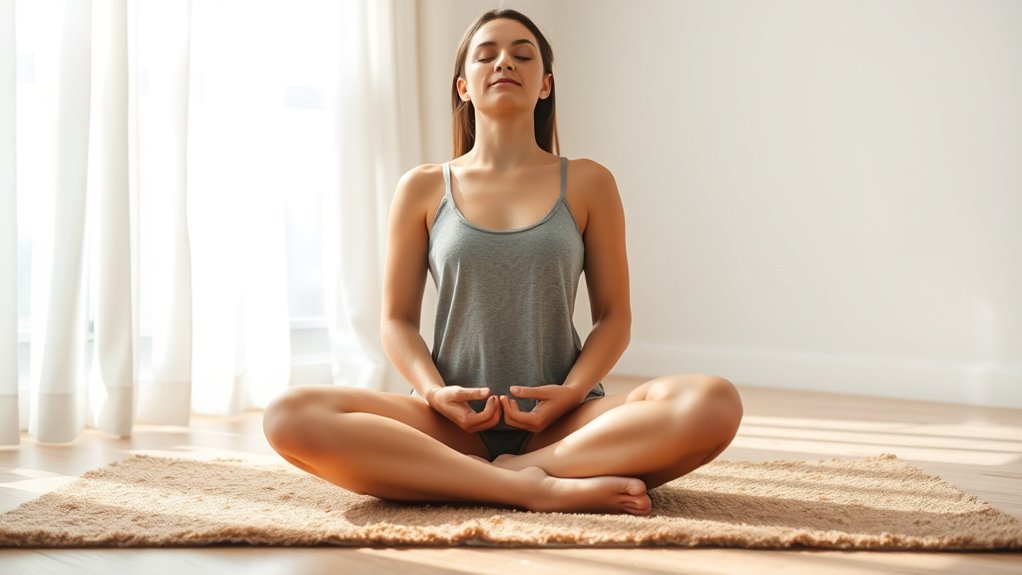
Breath awareness meditation is a simple yet powerful practice that helps you connect with the present moment. By focusing your attention on your breath, you create a calming anchor that keeps your mind from wandering into worries or distractions. This form of mindful breathing encourages you to observe each inhale and exhale without judgment, cultivating a sense of clarity and calmness. As you practice regularly, you’ll notice how this simple act can ground you, making everyday stresses easier to manage. Incorporating awareness of your respiratory health can further enhance the benefits of this practice.
Breath awareness meditation helps you stay present, calm, and grounded through mindful observation of each breath.
When you engage in breath awareness meditation, you start by finding a comfortable seated position. Close your eyes if that feels right, or softly gaze downward. Bring your awareness to your breathing, paying close attention to the sensation of air filling your lungs and then leaving your body. Don’t try to control your breath; simply observe it. Notice the rise and fall of your chest or the feeling of air passing through your nostrils. This mindful breathing helps you stay focused on the present moment, reducing the tendency for your mind to drift into past regrets or future anxieties.
One of the key benefits of this practice is stress reduction. When life feels overwhelming, taking a few moments to focus on your breath can instantly soothe your nervous system. As you breathe intentionally, your body produces fewer stress hormones, which helps you feel more centered and less reactive to external chaos. Regularly practicing breath awareness meditation trains your mind to respond more calmly to stressors, making it easier to navigate challenging situations with patience and clarity. Over time, you’ll find that this simple technique becomes a go-to tool for managing anxiety and tension in your daily life.
Incorporating mindful breathing into your routine doesn’t require any special equipment or lengthy sessions. Even a few minutes each day can have significant effects. As you deepen your awareness of your breath, you become more attuned to your body’s signals, recognizing when you’re tense or overwhelmed. This heightened awareness allows you to intentionally slow down, take a deep breath, and reset. Over time, these moments of mindful breathing become a natural part of your life, helping you cultivate resilience and emotional balance.
In essence, breath awareness meditation is a practical, accessible way to anchor yourself in the present moment. It’s a gentle reminder that, despite external chaos, you always have the power to find calm within. With consistent practice, you’ll discover that mindful breathing not only reduces stress but also enhances your overall sense of well-being, empowering you to face life’s challenges with greater ease and clarity.
Frequently Asked Questions
Can Breath Awareness Meditation Help With Anxiety?
Yes, breath awareness meditation can help with anxiety. By practicing mindfulness benefits through focused breathing techniques, you learn to calm your mind and reduce stress. When you pay attention to your breath, it slows your heart rate and relaxes your body, making it easier to manage anxious feelings. Incorporating these breathing techniques into your routine offers a simple, effective way to foster calmness and emotional resilience.
How Long Should I Practice Daily for Benefits?
Did you know that just 10 minutes of meditation daily can considerably reduce stress? For ideal timing, aim for at least 10 to 20 minutes each day. Your practice duration depends on your schedule and comfort, but consistency matters most. Set aside a specific time, like morning or evening, to build a habit. Over time, even brief sessions can boost your mental clarity and emotional resilience.
Is It Suitable for Children or Beginners?
Yes, breath awareness meditation is suitable for children and beginners. It’s an excellent mindfulness practice that helps develop focus and calmness. Start with simple beginner techniques like short 2-3 minute sessions, guiding them to pay attention to their breath without judgment. As they get comfortable, they can gradually increase the duration. This gentle approach guarantees the practice remains accessible and enjoyable for all ages and experience levels.
Are There Any Side Effects or Contraindications?
You might wonder if breath awareness meditation has hidden thorns. While generally gentle, it can cause physical side effects like dizziness or discomfort if you breathe too forcefully. Mentally, it might stir up anxiety or emotional discomfort for some. Always listen to your body and consult a healthcare professional if you have mental health considerations. With mindful practice, you can enjoy its calming benefits without unwanted side effects.
Can Breath Awareness Meditation Replace Medical Treatment?
Breath awareness meditation can’t replace medical treatment, but it can complement your mindfulness practice and help with stress reduction. You should continue following your healthcare provider’s advice for any health issues. Regularly practicing breath awareness enhances relaxation and mental clarity, making it a valuable addition to your overall wellness routine. However, always consult your doctor before substituting or combining meditation with any medical treatments.
Conclusion
Now that you’ve practiced breath awareness meditation, you’re opening a power greater than a thousand storms inside you. By simply paying attention to your breath, you can transform chaos into calm and find clarity amid life’s whirlwind. Keep practicing regularly, and you’ll discover a serenity so profound, it’s like having a superpower in your pocket. Embrace each breath as a gift, and watch your mind and body flourish beyond what you ever thought possible.