
TL;DR

Turn your wind-down time into listening time
- Thousands of audiobooks, podcasts and originals
- Listen on your phone, tablet or Echo — also offline
- Cancel anytime
Researchers tested an MRI-derived measure called DunedinPACNI in two groups of adults and found that faster scores were associated with higher blood-based multisystem aging scores. In a smaller group followed for 7 to 15 years, the marker was also associated with later biological-aging measures, but the study does not show that one scan can precisely predict an individual’s aging rate or future health.
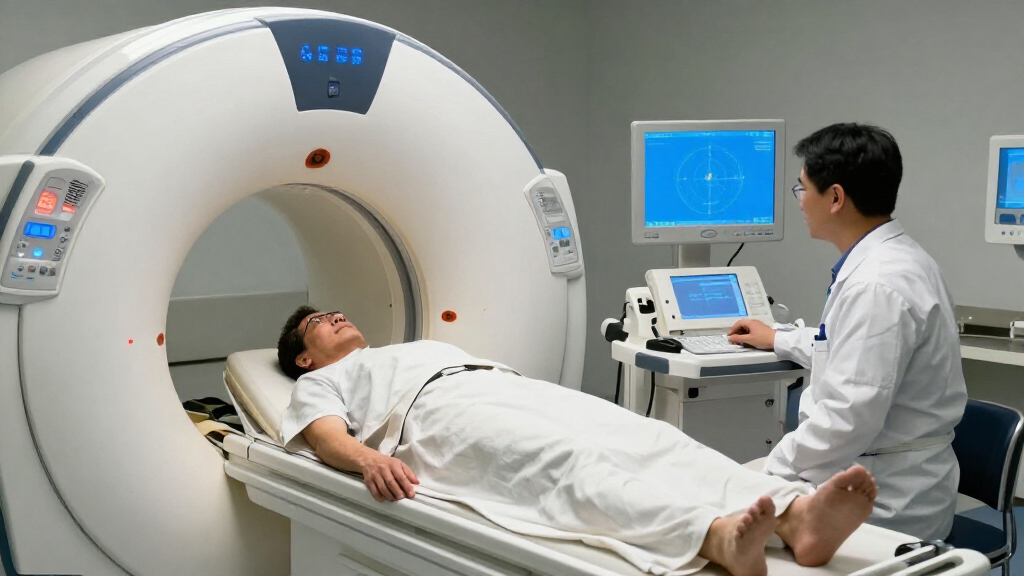
Researchers report that an MRI-based marker derived from a single brain scan was associated with blood-based measures of multisystem biological aging in two groups of middle-aged adults. The study, published in npj Aging, also examined later blood measurements in a smaller group, but it does not establish that one scan can determine exactly how quickly a person is aging or predict an individual’s health outcomes.
The study tested Dunedin Pace of Aging Calculated from Neuroimaging, or DunedinPACNI, a model that uses structural features from an MRI scan to estimate the pace of physiological aging. Researchers analyzed data from 451 participants in the University of Pittsburgh’s Adult Health and Behavior study and 295 in its Neurobiology of Adult Health study. Both cohorts included generally healthy adults recruited from communities around Pittsburgh.
In each cohort, faster DunedinPACNI scores were associated with higher scores on a composite of blood biomarkers linked to aging across several body systems. The researchers assessed eight biomarkers in one cohort and six in the other, drawn from a recommended panel that includes measures related to inflammation, metabolism, and organ function. The associations were statistically significant in both groups, though the authors did not formally compare their size because the cohorts differed in recruitment and study methods.
A subgroup of 224 participants had a second blood-based assessment 7 to 15 years after baseline. The researchers tested whether the brain-derived marker was associated with the later composite after accounting for the initial score. The report describes this longitudinal analysis as further evidence of a relationship, but the available findings do not establish a clinical prediction tool or show that the scan itself causes changes in health. DunedinPACNI was also associated with fewer years of education in both cohorts, even after adjustment for age and sex.
What a Brain Scan May Capture
The findings suggest that structural information from the brain may reflect aspects of aging across the body, rather than only age-related changes in the brain. That could matter to researchers seeking ways to study physiological aging, which involves changes across multiple systems and is linked to later health risks. A measure available from an MRI could provide a different kind of evidence alongside blood tests, though this study did not establish that it can replace them.
The results are associations, not proof that DunedinPACNI can tell an individual how fast they are aging or what disease they will develop. The study’s groups were drawn from a single metropolitan area and consisted of generally healthy adults. Before the measure could support personal health decisions, its accuracy, reliability, and usefulness would need to be tested in broader populations and against meaningful health outcomes.
Products Worth Considering

Withings Sleep Under-Mattress Sleep Tracking Pad

Hyperice Normatec 3 Full-Leg Compression Boots, Standard Size

Levoit Core 400S-P Smart Air Purifier for Large Rooms
As an affiliate, we earn on qualifying purchases.
How DunedinPACNI Was Developed
DunedinPACNI was developed using data from the Dunedin Study. Its model links midlife brain structure with earlier changes in 19 measures of physiological health. Earlier research had associated faster scores with socioeconomic disadvantage, chronic disease, and mortality, but the marker’s relationship to whole-body aging and its consistency across populations and measurement approaches remained open questions.
For the new analysis, researchers extracted cortical structure measurements from MRI scans and entered them into the DunedinPACNI model. They built separate blood-based aging composites for the two cohorts. The cohorts differed in MRI scanners, scan protocols, recruitment periods, and eligibility criteria, which is why the authors treated their estimates separately rather than directly comparing their magnitude.
The team also compared DunedinPACNI with three established brain-age measures: brainageR, ENIGMA, and DeepBrainNet. The reported associations with the blood-based aging composites generally remained after adjustment for those measures. One association in the Adult Health and Behavior cohort weakened and was no longer statistically significant after adjustment for DeepBrainNet. The alternative measures did not show independent associations with the composites.
“The researchers describe the results as evidence that faster DunedinPACNI is associated with higher multisystem biological aging in both cohorts.”
— The study authors
Limits on Individual Predictions
The study does not show how accurately a scan predicts the aging rate or future health of a particular person. It reports associations with blood biomarker composites, and the supplied study summary does not provide a clinically validated threshold for interpreting an individual’s DunedinPACNI score. It also does not establish that using the marker improves diagnosis, treatment, or health outcomes.
How well the finding applies beyond these two Pittsburgh-area cohorts remains uncertain. The cohorts used different protocols and recruited participants at different times; the study included generally healthy adults. The available report also does not give the full numerical effect estimates or enough detail to determine how much the marker adds to other risk information for an individual. Further validation in varied populations would be needed.
Further Validation Is Needed
The next step is to test the marker in larger and more diverse groups and determine whether it consistently tracks later changes in health, not only blood-based aging composites. Researchers would also need to establish how scores should be interpreted, how much measurement variation comes from scan methods, and whether the marker adds useful information beyond existing clinical measures.
For now, the study supports continued research into MRI-based indicators of physiological aging. It does not warrant treating a single brain scan as a definitive measure of a person’s biological age or as a substitute for medical assessment.
Key Questions
Can one brain scan tell how quickly a person is aging?
Not definitively based on this study. The researchers found that an MRI-derived score was associated with blood-based measures of multisystem aging, but they did not validate it as a precise individual prediction.
What is DunedinPACNI?
DunedinPACNI is a model that uses structural features from an MRI scan to estimate the pace of physiological aging. It was developed using data linking midlife brain structure with earlier changes in measures of health.
What did the researchers find?
Faster DunedinPACNI scores were associated with higher blood-based biological-aging composite scores in two cohorts. A smaller follow-up group also had later blood assessments 7 to 15 years after baseline.
Does this mean a brain scan can diagnose disease?
No. The study does not establish that the marker diagnoses a condition, predicts a specific disease, or improves treatment decisions. It reports associations that require further research.
Who took part in the study?
The analysis included 451 participants in the Adult Health and Behavior cohort and 295 in the Neurobiology of Adult Health cohort. Both groups consisted of generally healthy adults recruited around Pittsburgh.
Source: news-medical.net