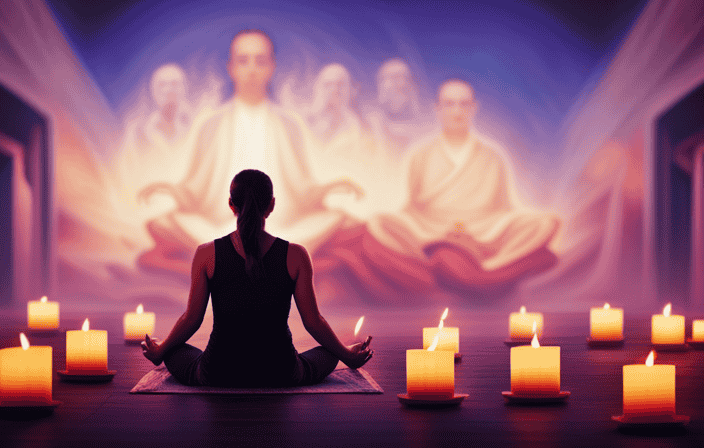
To create a meditation routine you’ll stick with, set a specific time each day and keep sessions short, like five minutes, to build consistency. Find a comfortable space free of distractions and personalize it to feel inviting. Use tools like guided meditations or timers if needed, and be flexible—allow for adjustments and don’t get discouraged by missed days. Keep focusing on progress and make mindful moments part of your daily life for lasting benefits. Want more tips?
Key Takeaways
- Establish a consistent daily time and simple, comfortable space for meditation.
- Use guided sessions or apps to provide structure and keep motivation high.
- Keep sessions short initially, focusing on regularity over duration.
- Personalize your environment with calming elements and minimize distractions.
- Be patient, flexible, and forgiving to maintain long-term commitment.
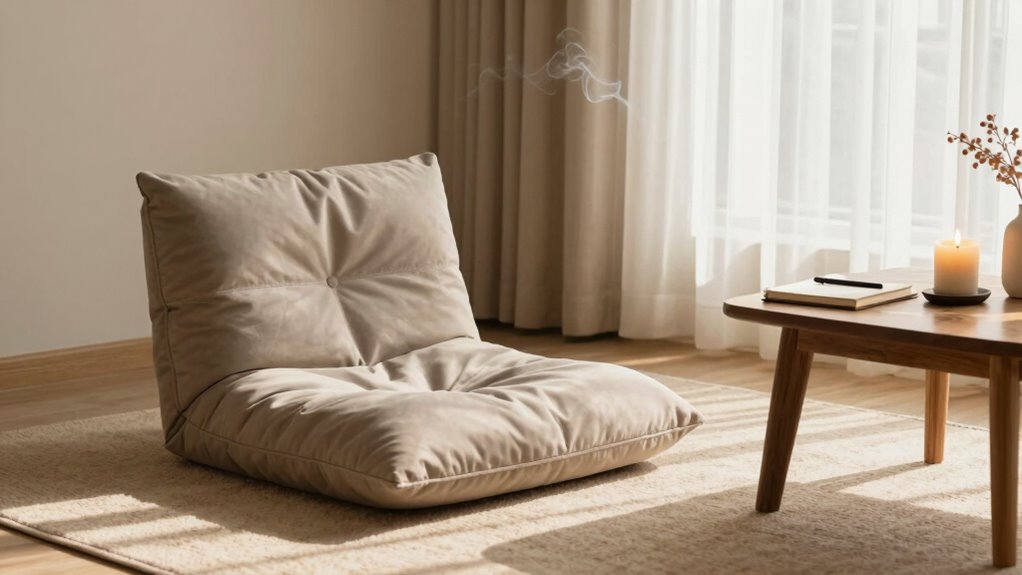
Starting a meditation routine can feel overwhelming at first, but with the right approach, you’ll find it easier to stick with it. The key is to keep things simple and create an environment that encourages consistency. Begin by identifying a specific time each day that works for you—morning, lunch break, or evening—and commit to it. Having a set time helps your mind establish a routine and makes meditation a natural part of your day. You don’t need elaborate setups; even sitting comfortably in your favorite chair or on the floor works. To make your practice inviting, consider investing in a few meditation accessories like a cushion, mat, or a small bench. These items can improve your comfort and motivate you to meditate regularly.
Start with a simple, consistent time and comfortable space to build a sustainable meditation routine.
One effective way to deepen your practice is by incorporating mindfulness techniques. Instead of trying to clear your mind completely, focus on bringing awareness to your breath, sensations in your body, or sounds around you. These techniques help anchor your attention and reduce distractions. For example, you might practice focusing on your inhale and exhale, gently bringing your mind back whenever it wanders. The more you practice, the easier it becomes to enter a calm, centered state. Remember, consistency beats duration—meditating for five minutes daily is better than doing an hour once a week. Over time, you’ll notice that these small, regular sessions have a significant impact on your overall well-being.
To help you stay committed, make your space inviting and free of distractions. Dim the lights, turn off notifications, and create a quiet environment. You could also use meditation accessories like a timer or calming essential oils to enhance your experience. Guided meditations are excellent for beginners; they provide structure and focus, making it easier to develop a habit. Apps or online recordings can be valuable tools in this regard. Keep in mind, your routine should feel sustainable, not burdensome. If you miss a day, don’t get discouraged—simply return to your practice the next day. The goal is progress, not perfection.
As you build your routine, pay attention to what works best for you. Adjust your techniques, environment, or timing as needed. Meditation isn’t a one-size-fits-all activity; it’s a personal journey. With patience and consistency, you’ll find that meditating becomes a natural and rewarding part of your daily life. Incorporating natural environments can also enhance your experience by making your practice feel more connected to the outdoors. Over time, these mindful moments will help you feel more centered, focused, and calmer throughout your day.

Mindsight 'Original Breathing Buddha' Guided Visual Meditation | 3 Modes to Slow Your Breathing & Calm Your Mind | Stress & Anxiety Relief | Wellness Gift | Adults, Kids, Classrooms | USB Rechargeable
- Purpose: Calms and focuses the mind daily
- Usage Modes: 3 breathing modes and night light
- Breathing Techniques: 4/7/8, 5/5, 4/4/4/4 patterns
As an affiliate, we earn on qualifying purchases.
As an affiliate, we earn on qualifying purchases.
Frequently Asked Questions
How Long Should My Daily Meditation Session Be?
You should start with 5 to 10 minutes of daily meditation, gradually increasing as you become more comfortable. This allows you to build consistency with your mindfulness practices without feeling overwhelmed. Use simple meditation techniques like focused breathing or body scans. Over time, you can extend your sessions to 15 or 20 minutes. The key is to stay committed and adapt your routine to fit your schedule and needs.
What if I Can’t Quiet My Mind During Meditation?
Your mind might feel like a noisy crowd, but that’s okay—it’s part of the process. When you can’t quiet your mind, focus on mindfulness techniques like breath awareness. Gently redirect your attention to your breath each time thoughts drift away. With patience, this practice helps you observe your thoughts without judgment, gradually calming your mind and deepening your meditation. Remember, progress is a journey, not a destination.
Can I Meditate While Lying Down or Moving?
Yes, you can meditate while lying down or moving. If lying down feels more comfortable, choose a sleep position that supports relaxation, like on your back or side. For movement, try gentle techniques such as walking, yoga, or tai chi, which can help you stay mindful. Both options can deepen your practice, especially if sitting still is challenging. Just focus on staying present and breathing deeply throughout.
What’s the Best Time of Day to Meditate?
The best time of day to meditate is in the morning or evening when you can focus without distractions. During these times, you can practice mindfulness exercises that enhance meditation benefits like stress reduction and mental clarity. Morning meditation sets a calm tone for the day, while evening sessions help unwind. Regular practice at these times makes it easier to develop a consistent routine and enjoy the full benefits of meditation.
How Do I Stay Motivated to Meditate Consistently?
Imagine Sarah, who keeps motivated by incorporating mindfulness techniques into her daily routine. She sets out her favorite meditation accessories, like a cozy cushion and calming incense, making her space inviting. To stay consistent, she reminds herself of her goals and celebrates small wins. Using these tools and techniques, you’ll find it easier to stay motivated, turning meditation into a rewarding, sustainable habit that enhances your well-being every day.
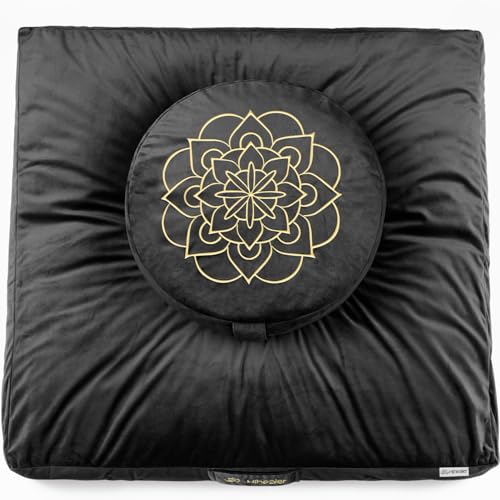
Hihealer Meditation Cushion Set Large Velvet Floor Pillow & Traditional Tibetan Yoga Bolster for Adults Zafu Meditation Mat with Buckwheat Filling (Black)
- Design Inspiration: Traditional Tibetan-inspired aesthetic
- Material & Filling: Velvet cover with buckwheat filling
- Uses & Versatility: Suitable for meditation, yoga, and decor
As an affiliate, we earn on qualifying purchases.
As an affiliate, we earn on qualifying purchases.
Conclusion
By starting small and making meditation a non-negotiable part of your day, you set yourself up for success. Remember, Rome wasn’t built in a day, so be patient as you develop your routine. Consistency beats intensity, so focus on showing up every day, even if just for a few minutes. Stick with it, and soon, meditation will become as natural as breathing — and you’ll wonder how you ever lived without it.
As an affiliate, we earn on qualifying purchases.
As an affiliate, we earn on qualifying purchases.