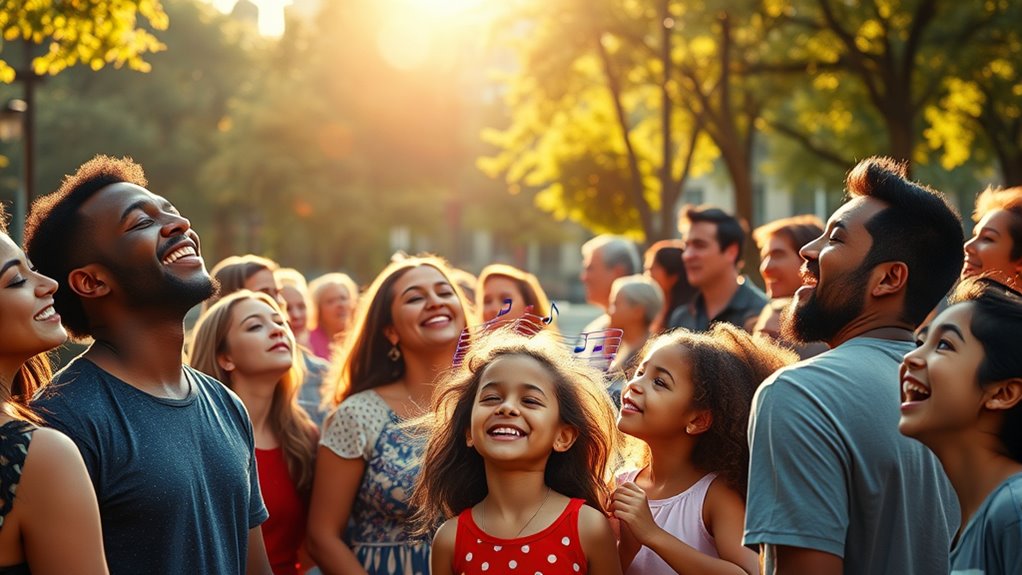
Music acts as a universal language that lets you connect with others beyond words, sharing emotions and stories from diverse cultures. It breaks down barriers created by differences in tradition, religion, or nationality, fostering empathy and understanding. Through listening, performing, or cultural exchange, you experience a sense of belonging and unity. This powerful connection reminds us all that music unites humanity, and exploring its depths can bring even deeper appreciation and compassion.
Key Takeaways
- Music serves as a universal language that bridges cultural and linguistic differences, fostering shared emotional experiences.
- It promotes empathy and understanding by connecting people through collective participation and shared stories.
- Music facilitates cultural exchange, allowing communities to learn from and appreciate diverse traditions and perspectives.
- Therapeutic uses of music help individuals process emotions, reduce stress, and build social bonds across backgrounds.
- Overall, music strengthens human connections, promotes unity, and highlights our common humanity despite differences.
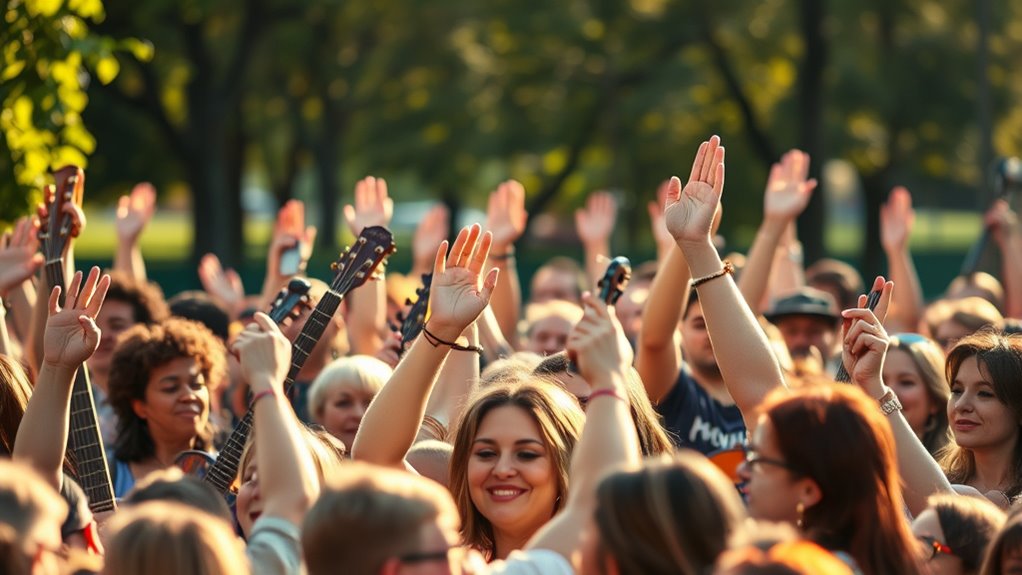
Music has an extraordinary power to unite people across cultures, languages, and backgrounds. It acts as a universal language that transcends words, allowing you to connect emotionally with others regardless of where they come from. This unique ability fosters a sense of shared humanity, breaking down barriers built by differences in tradition, religion, or nationality. When you listen to music from different parts of the world, you’re not just hearing sounds—you’re experiencing stories, histories, and emotions that bridge gaps between communities. This form of cultural exchange enriches your understanding of others, helping you see beyond superficial distinctions and appreciate the common threads that run through us all.
Music unites cultures and emotions, bridging gaps and fostering shared humanity through stories, histories, and universal understanding.
One powerful way music facilitates these connections is through music therapy. Whether you’re seeking healing, comfort, or self-expression, music therapy harnesses the emotional potency of sound to promote well-being. It’s used across cultures, adapting to local traditions and musical styles to resonate deeply with individuals. When you participate in music therapy, you tap into a tool that’s both personal and communal. It can help you process complex feelings, reduce stress, or foster social bonds, especially when shared with others in group settings. This therapeutic use of music exemplifies its ability to foster empathy and understanding, creating a shared experience that can bridge personal and cultural divides. Additionally, engaging with diverse musical styles can enhance your cultural awareness, further strengthening human connections.
Cultural exchange is another essential aspect of how music connects humanity. When you explore musical traditions from different countries, you gain insight into their histories, values, and worldviews. Participating in cultural exchange through music might mean attending a concert, learning traditional instruments, or collaborating with musicians from diverse backgrounds. These exchanges open your mind to new rhythms, melodies, and harmonies, enriching your musical palette and broadening your perspective. They also cultivate respect and appreciation for different cultures, strengthening the bonds that tie humanity together. Rather than viewing unfamiliar music as foreign, you start to see it as an invitation to understand and celebrate diversity.
Ultimately, music’s power lies in its ability to foster empathy, understanding, and connection. When you engage with music—whether through listening, performing, or therapy—you’re participating in a global dialogue that emphasizes shared experiences over differences. It’s a tool that encourages compassion and unity, reminding you that despite your individual background, you are part of a larger human story. Through music, you realize that our differences are what make the collective experience richer, and that, at our core, we all seek connection, understanding, and expression.
Frequently Asked Questions
How Does Music Influence Emotional Development Across Different Cultures?
You see, music influences emotional development across cultures by enhancing emotional intelligence and serving as a essential form of cultural expression. When you engage with diverse musical styles, you learn to recognize and understand various emotions, strengthening your empathy. Different cultures use music to communicate shared feelings, helping you connect more deeply with others’ experiences. This shared emotional language fosters understanding and compassion, bridging cultural gaps and enriching your emotional growth.
Can Music Therapy Effectively Treat Mental Health Conditions Worldwide?
You might think music therapy isn’t effective everywhere, but it truly is a powerful mental health intervention worldwide. The benefits of music therapy—reducing anxiety, improving mood, and enhancing emotional expression—are backed by research. Its adaptability makes it a versatile tool for mental health treatments across diverse cultures. So yes, music therapy can effectively treat mental health conditions globally, helping people find healing and connection through the universal language of music.
What Are the Neurological Effects of Shared Musical Experiences?
When you share musical experiences, your brain undergoes neural synchronization, aligning activity across regions involved in emotion and perception. This process enhances emotional resonance, making you feel more connected and understood. As your neural patterns synchronize with others’, you experience a deeper sense of empathy and social bonding. These effects foster collective emotional states, strengthening human connections through music’s power to unify minds and hearts.
How Does Music Facilitate Communication in Multilingual Communities?
You can see how music facilitates communication in multilingual communities through musical symbolism and cultural exchanges. When you share songs or rhythms, you tap into universal emotions and messages that transcend language barriers. This shared musical language allows you to express identity, foster understanding, and build connections, making cultural exchanges richer and more meaningful. Music becomes a bridge, enabling you to communicate beyond words and embrace diverse perspectives.
In What Ways Does Music Preserve Cultural Identity and Heritage?
Music is a powerful force that preserves cultural identity and heritage like nothing else, shaping the very fabric of tradition. You can hear cultural storytelling woven into every note, ensuring traditions thrive across generations. By performing traditional songs and dances, you actively participate in tradition preservation, keeping your heritage alive and vibrant. Music’s ability to encapsulate history makes it an unstoppable keeper of cultural legacy, more enduring than any monument ever built.
Conclusion
As you listen to music, imagine vibrant threads weaving through a vast, colorful tapestry, connecting souls across the world. Each note, rhythm, and harmony acts as a bridge, uniting strangers in shared emotion and understanding. Feel the gentle pulse of melodies that transcend language, wrapping you in a warm embrace. In this infinite dance of sound, you realize that music isn’t just heard—it’s felt, a timeless force that links humanity in a symphony of togetherness.