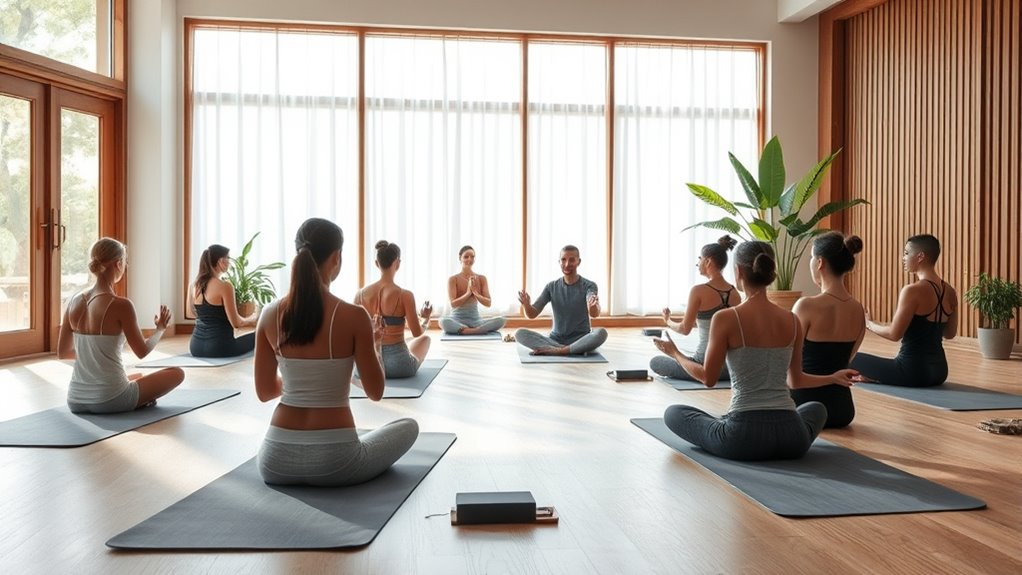

To start your yoga journey, focus on foundational poses like Mountain, Downward Dog, and Warrior. These help build strength, flexibility, and balance while calming your mind. Use a non-slip mat, wear comfortable clothing, and incorporate breathing techniques like diaphragmatic breathing or Ujjayi. Adding accessories such as blocks or straps can make poses easier and safer. Mastering these basics creates a solid foundation—continue below to discover how to deepen your practice effectively.

Turn your wind-down time into listening time
- Thousands of audiobooks, podcasts and originals
- Listen on your phone, tablet or Echo — also offline
- Cancel anytime
Key Takeaways
- Start with basic poses like Mountain, Downward Dog, and Child’s Pose to build foundational strength and flexibility.
- Focus on proper breathing techniques, such as diaphragmatic and Ujjayi breath, to enhance pose stability and mindfulness.
- Use beginner-friendly accessories like yoga blocks and straps to maintain alignment and support during poses.
- Practice gradually, emphasizing correct form and consistency over perfection for steady progress.
- Create a quiet, clutter-free space and wear comfortable clothing to improve focus and comfort during practice.
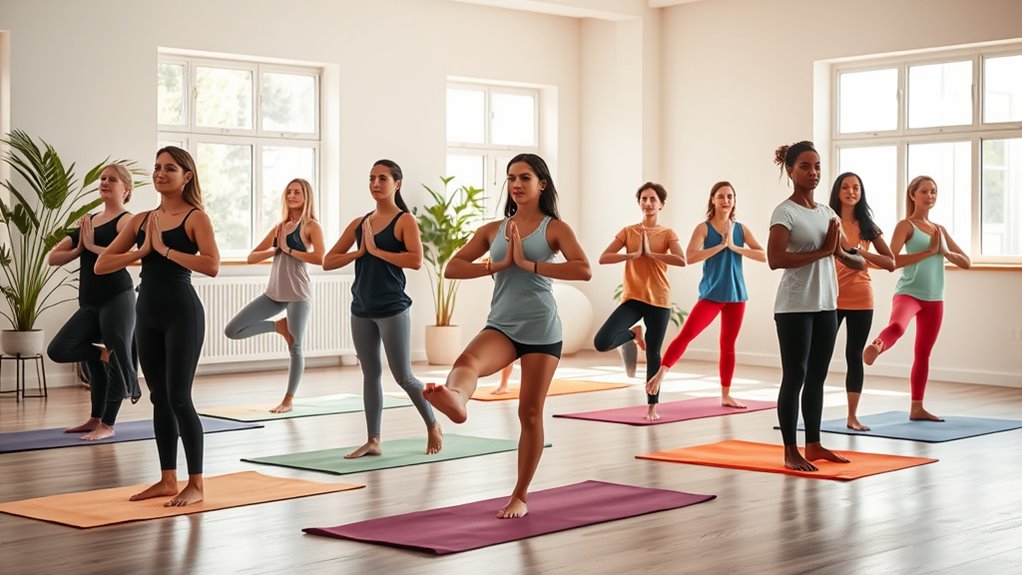
Starting yoga as a beginner can be both exciting and overwhelming. You might feel enthusiastic to try new poses but also unsure where to start or how to do them correctly. The good news is that building a strong foundation begins with understanding some basic principles, especially breathing techniques and the right yoga accessories. These elements help you stay focused, improve your practice, and prevent injury.
Breathing techniques, or pranayama, are essential in yoga. They help calm your mind, increase oxygen flow, and deepen your poses. As a beginner, focus on simple breathing exercises like diaphragmatic breathing or Ujjayi breath. Ujjayi involves slightly constricting the back of your throat to create a gentle, ocean-like sound as you breathe in and out through your nose. This controlled breathing stabilizes your practice, enhances concentration, and maintains your energy levels. When you’re practicing, try to synchronize your breath with your movements, inhaling as you lift or extend and exhaling as you fold or lower. Over time, paying attention to your breathing will make your poses more effective and help you stay present.
Equally important are yoga accessories, which can make the experience more comfortable and safe. A good yoga mat provides cushioning and grip, preventing slips and offering support during standing or balancing poses. As a beginner, choose a non-slip mat and ensure it’s long enough for your height. Yoga blocks are handy for modifying poses or providing extra stability, especially if you’re tight in your hamstrings or hips. Straps can help deepen stretches or assist in maintaining proper alignment. Additionally, comfortable clothing that allows free movement and a quiet, clutter-free space contribute to a better practice. You might also consider a yoga bolster or cushion for seated poses, helping you relax and maintain proper posture.
Starting with the right accessories and mastering breathing techniques sets you up for success. They’re simple tools that make your practice more enjoyable and effective. Remember, yoga isn’t about perfecting every pose right away; it’s about gradual progress and awareness. Use your accessories wisely, focus on your breath, and approach each session with patience. As you become more familiar with the foundational poses, you’ll notice your confidence and comfort level grow. Keep practicing consistently, and don’t hesitate to seek guidance from a qualified instructor or online tutorials. The journey into yoga is personal and rewarding, and with these basics, you’re well on your way to developing a safe, enjoyable practice that benefits your body and mind.
As an affiliate, we earn on qualifying purchases.
Frequently Asked Questions
How Often Should Beginners Practice Yoga Weekly?
You should aim to practice yoga about three to four times a week, following the frequency guidelines for beginners. Consistency tips include setting a regular schedule and starting with shorter sessions to build habit. This approach helps your body adapt gradually, reduces injury risk, and enhances progress. Remember, quality matters more than quantity, so focus on proper form and listening to your body during each practice.
What Equipment Is Essential for Starting Yoga?
Think of your yoga journey as planting a seed; your essential equipment is the nourishing soil. You’ll need a good yoga mat to anchor your practice and comfortable clothing that moves with you like a gentle breeze. These tools create a supportive environment, allowing you to focus on your breath and poses without distraction. With just a mat and comfy clothes, you’re ready to blossom into your yoga practice.
Can I Do Yoga With Pre-Existing Injuries?
Yes, you can do yoga with pre-existing injuries, but you should prioritize injury adaptations and medical considerations. Always consult your healthcare provider before starting. Inform your instructor about your injuries so they can suggest modifications. Focus on gentle poses, avoid strain, and listen to your body. With proper guidance and caution, yoga can help improve flexibility and strength without aggravating your injuries.
How Do I Choose the Right Yoga Style for Me?
Choosing the right yoga style is like finding your perfect dance partner; it should feel natural and inspiring. To do this, explore different styles, paying attention to your body’s signals. Focus on yoga philosophy and breathing techniques to guide your choice—gentle styles like Hatha or restorative yoga might suit beginners, while Vinyasa or Ashtanga offer more flow. Trust your instincts, and you’ll discover the style that resonates with your energy and goals.
Is There a Specific Time of Day Best for Yoga Practice?
You should practice yoga when it fits best into your schedule, but many find the best morning routines involve gentle stretches to energize their day. Alternatively, evening relaxation techniques help you unwind and prepare for restful sleep. Consistency is key, so choose a time that feels natural and manageable, whether morning or evening, to build a sustainable yoga habit that benefits your body and mind.
As an affiliate, we earn on qualifying purchases.
Conclusion
As you step onto your yoga journey, think of each pose as a building block shaping your inner landscape. With patience and practice, you’ll weave a tapestry of strength and serenity, like a gentle river carving through stone. Remember, every breath is a brushstroke painting your path to balance. Keep going, and soon, you’ll find yourself blossoming into the best version of you—grounded, radiant, and alive.
As an affiliate, we earn on qualifying purchases.
comfortable yoga clothing for women
As an affiliate, we earn on qualifying purchases.
As an affiliate, we earn on qualifying purchases.
Halloween Picks
halloween
As an affiliate, we earn on qualifying purchases.