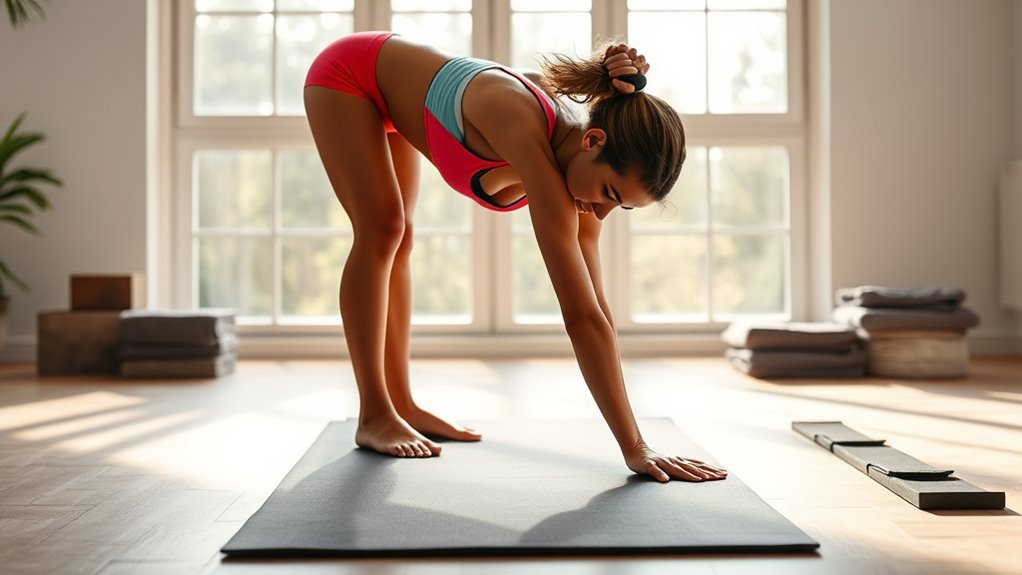

Incorporating yoga into your running routine helps you stretch tight muscles like hamstrings, calves, and hips, improving flexibility and reducing injury risk. Focused breathing and mindfulness during practice boost recovery, ease muscle soreness, and support mental clarity. Regular yoga builds long-term mobility and enhances focus, contributing to better performance. As you continue exploring, you’ll discover more ways yoga can elevate your running experience and optimize your recovery process.
Key Takeaways
- Incorporate targeted yoga stretches to release tension in hip flexors, hamstrings, calves, and quadriceps, improving flexibility and running efficiency.
- Use mindful breathing techniques during yoga to promote relaxation, enhance oxygen intake, and support stamina recovery post-run.
- Integrate body awareness practices to detect tight muscles or imbalances early, reducing injury risk and aiding effective stretching.
- Combine yoga with hydration, such as no-sugar-added juices, to optimize recovery, reduce soreness, and replenish lost fluids.
- Consistent yoga practice enhances mobility, flexibility, and mental focus, leading to better performance and faster recovery for runners.
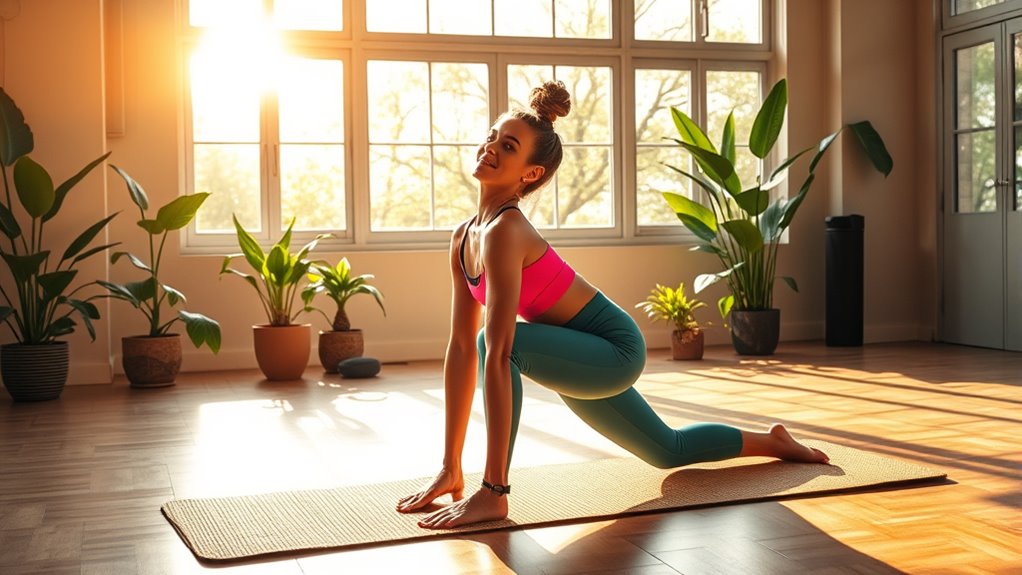
If you’re a runner looking to boost your performance and prevent injuries, incorporating yoga into your routine can be highly beneficial. One of the key aspects of yoga that directly supports running is its emphasis on breathing techniques. By practicing mindful, controlled breathing, you can improve your oxygen intake, which helps increase stamina and endurance during runs. Deep diaphragmatic breaths also promote relaxation, reducing tension in your muscles and calming your nervous system. Over time, these breathing techniques become second nature, enabling you to stay focused and composed even during intense runs or races. Additionally, mindful breathing encourages better body awareness, so you can detect early signs of fatigue or discomfort, allowing you to adjust your pace or form accordingly.
Enhance your runs with mindful breathing, boosting stamina, relaxation, and body awareness for better performance and injury prevention.
Beyond breathing, mindfulness practices are integral to yoga and can substantially enhance your running experience. When you cultivate mindfulness, you learn to be present in the moment, paying close attention to how your body feels during each stride or stretch. This heightened awareness helps you identify tight spots, overused muscles, or imbalances that could lead to injury if ignored. Incorporating mindfulness into your stretching routines helps you connect with your body’s signals, making your recovery more effective. For example, during a yoga session, you might focus on the sensation of your muscles elongating or the flow of your breath, which fosters a sense of calm and concentration. This mental clarity translates into better running form and reduces the risk of overtraining or burnout.
Yoga also encourages a gentle yet effective approach to stretching and recovery. You can use specific poses to target muscles that are commonly tight in runners, such as hip flexors, hamstrings, calves, and quadriceps. These stretches help improve flexibility and range of motion, which are essential for efficient running mechanics. When combined with mindfulness practices, stretching becomes more than just a physical activity; it turns into a moment of meditation and self-care. This mental shift makes you more aware of your body’s limits and helps you avoid pushing too hard, which is often how injuries happen. Incorporating yoga into your training schedule—especially post-run—can accelerate recovery, reduce soreness, and promote long-term mobility.
Additionally, exploring popular juice brands that offer no-sugar-added options can be a refreshing way to hydrate after a run, supporting your recovery process. In short, integrating yoga into your running routine isn’t just about flexibility; it’s about fostering a deeper connection with your body through breathing techniques and mindfulness practices. These elements help you stay relaxed, focused, and resilient, ultimately making you a stronger, healthier runner. With consistent practice, you’ll notice improvements in your performance, recovery, and overall well-being, turning yoga into a powerful complement to your running journey.

OPTP The Original Stretch Out Strap with Exercise Book, USA-Made Yoga Strap
- Trusted by Professionals: Recommended by physical therapists and trainers
- Versatile Use: Suitable for yoga, therapy, and workouts
- Health Benefits: Enhances flexibility and muscle recovery
As an affiliate, we earn on qualifying purchases.
Frequently Asked Questions
Can Yoga Improve My Running Speed?
Yes, yoga can improve your running speed by enhancing your breath control and mental focus. As you practice yoga, you learn to breathe more efficiently, increasing oxygen intake and stamina. The mental focus developed through yoga helps you stay concentrated during runs, pushing through fatigue. This combination boosts your overall performance, making you faster and more resilient. Incorporate yoga regularly, and you’ll notice improvements in both your speed and endurance.
How Often Should Runners Practice Yoga?
Think of it like tuning a vintage radio—you need consistent practice for clear sound. You should aim for yoga 2-4 times a week, depending on your running schedule and recovery needs. Following frequency recommendations helps prevent injuries and boosts flexibility. Practice consistency is key; even short, daily sessions can make a big difference. Stay committed, and you’ll notice improved performance and quicker recovery over time.
Are Specific Yoga Poses Better for Knee Pain?
Yes, some yoga poses are better for knee pain because they improve knee alignment and reduce strain. Focus on poses like Warrior II and Bridge, but always listen to your body. Use pose modifications if needed, such as reducing depth or supporting your knees with props. These adjustments help target knee relief while maintaining proper alignment, making your practice safer and more effective for managing knee pain.
Can Yoga Help Prevent Common Running Injuries?
Yes, yoga can help prevent common running injuries by improving flexibility, strength, and balance. These cross training benefits make your muscles more resilient and reduce strain. Plus, yoga enhances mental focus, helping you stay attentive to proper form during runs. By incorporating regular yoga sessions into your routine, you support overall injury prevention and boost your running performance, making you less prone to setbacks and more consistent in training.
Is Yoga Suitable for Beginners With Limited Flexibility?
Even in the days of chivalry, knights practiced stretching, proving yoga’s timeless benefits. If you have flexibility challenges, yoga is still suitable for beginners. Many beginner-friendly poses gently improve flexibility and strength without overwhelm. You can start with simple stretches and gradually progress. Yoga adapts to your level, making it accessible and effective, even if you’re just beginning or have limited flexibility.

Stretching Strap Yoga Strap with Loops for Physical Therapy, Non-Elastic
- Versatile Physical Therapy Tool: Relieves muscle soreness and improves flexibility
- High-Quality Durable Material: Made of non-elastic, premium nylon for stability
- Lightweight and User-Friendly: 75-inch, 10-loop strap suitable for beginners
As an affiliate, we earn on qualifying purchases.
Conclusion
Think of yoga as the gentle river guiding your runner’s journey. It flows smoothly through your muscles, washing away tension and nourishing your strength. Just as a river carves its path over time, consistent yoga practice shapes a resilient, flexible foundation beneath your running. Embrace this flow, and watch how your body becomes a well-tuned vessel, ready to conquer every mile with grace and ease. Let yoga be the current that keeps you moving forward.

Stretching Strap with Loops, Non Elastic Stretch Band for Physical Therapy
- Enhances Flexibility and Safety: Improves stretching and yoga skills with comfort handles
- Versatile for Multiple Sports: Suitable for stretching, Pilates, fitness, therapy, ballet, dance
- Portable and Convenient: Includes carry bag for easy transport and use
As an affiliate, we earn on qualifying purchases.

Trideer Stretching Strap Yoga Strap Physical Therapy for Home Workout, Exercise, Pilates and Gymnastics, 10 Loops Non-Elastic Stretch Bands with Aesthetic Packaging for Women & Men (Black)
- Home Physical Therapy Support: Assists knee, hip, and leg mobility at home
- Non-Elastic, Steady Resistance: Provides consistent stretch without rebound
- Multiple Loops for Easy Grip: Adjust stretch depth and track progress
As an affiliate, we earn on qualifying purchases.