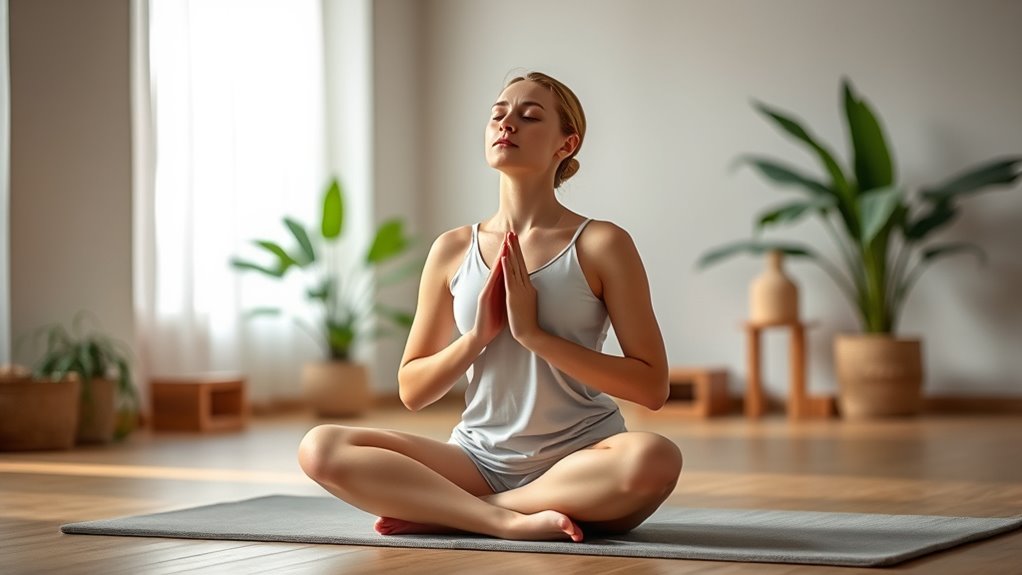
Breathwork in yoga, especially through pranayama, involves controlling your breath to deepen your practice, focus your mind, and regulate your energy. Techniques like diaphragmatic breathing and Ujjayi help relax your nervous system, improve oxygen flow, and anchor your awareness. By paying mindful attention to your breath, you can enhance both physical poses and mental clarity. Keep exploring, and you’ll uncover even more ways to harness your breath for greater wellbeing.

Turn your wind-down time into listening time
- Thousands of audiobooks, podcasts and originals
- Listen on your phone, tablet or Echo — also offline
- Cancel anytime
Key Takeaways
- Pranayama involves controlling breath to deepen physical and mental connection in yoga practice.
- Key techniques include diaphragmatic breathing and Ujjayi breath, which enhance focus and relaxation.
- Mindful breathing exercises cultivate awareness, reduce stress, and improve concentration during yoga.
- Breath control supports energy regulation, emotional balance, and prepares the mind for meditation.
- Mastering pranayama unlocks physical, mental, and emotional benefits, enriching overall yoga experience.
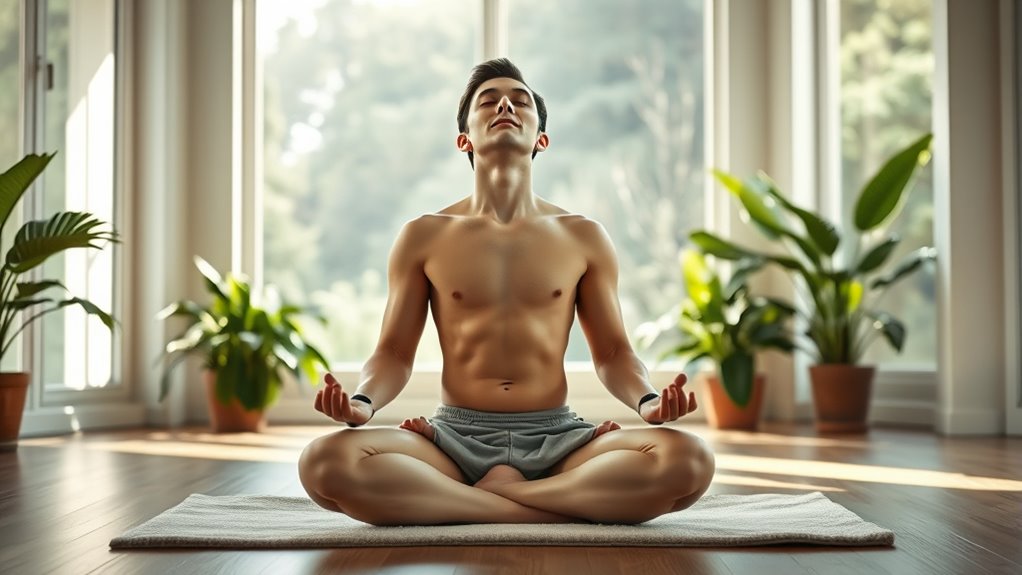
Have you ever wondered how breath can influence your yoga practice? It’s more than just inhaling and exhaling; it’s about understanding how to harness your breath to deepen your connection with your body and mind. Breath control techniques, or pranayama, are fundamental tools that can elevate your practice, helping you cultivate focus, calmness, and vitality. When you incorporate mindful breathing exercises into your routine, you become more aware of your breath’s flow, learning to use it as a powerful instrument to enhance every pose and meditation. These techniques can be simple yet profoundly effective, shaping the way you experience yoga both on and off the mat.
Harness your breath to deepen your yoga practice and connect mind and body through simple, powerful techniques.
Starting with breath control techniques, you’ll find that they serve as a foundation for managing your energy and emotions. One common method is diaphragmatic breathing, where you breathe deeply into your belly, allowing your lungs to expand fully. This not only relaxes your nervous system but also increases oxygen intake, which energizes your body. Another technique is Ujjayi breath, often called “victorious breath,” which involves slightly constricting the back of the throat to create a gentle sound during inhalation and exhalation. This breath helps maintain focus and provides a steady rhythm during your practice, anchoring your awareness in the present moment. Developing awareness of your breath can also help you identify and release tension stored in your body, making your practice more effective.
Incorporating mindful breathing exercises into your yoga routine encourages you to pay close attention to each breath cycle. Instead of rushing through your inhales and exhales, you slow down, savoring the sensations and movements of your breath. This mindfulness fosters a sense of grounding and clarity, making every pose more intentional. You might try counting your breaths or simply observing the natural flow without judgment, which can help quiet mental chatter and cultivate a sense of peace. As you develop consistency with these exercises, you’ll notice improvements in your concentration, stress levels, and overall wellbeing.
Practicing breathwork in yoga isn’t about forcing your breath or achieving perfect patterns; it’s about cultivating awareness and control. As you become more attuned to your breathing patterns, you’ll find it easier to regulate your energy, especially during challenging poses or stressful moments. Over time, these mindful breathing exercises become a natural part of your daily routine, empowering you to carry calmness and focus beyond the mat. Whether you’re seeking physical strength, mental clarity, or emotional balance, mastering breath control techniques can *unlock* new depths in your yoga journey. Remember, your breath is always with you—learning to listen and respond to it is one of the most *vital* skills you can develop in your practice. Developing a better understanding of breathing can greatly enhance your overall well-being and connection in yoga.
pranayama yoga breathing exercises
As an affiliate, we earn on qualifying purchases.
As an affiliate, we earn on qualifying purchases.
Frequently Asked Questions
How Does Breathwork Impact Mental Health Over Time?
Breathwork boosts your mental health over time by enhancing mindfulness meditation and emotional regulation. As you practice, you become more aware of your thoughts and feelings, reducing stress and anxiety. This improved emotional regulation helps you respond calmly to challenges. Consistent breathwork creates a sense of calm and clarity, strengthening your resilience. Over time, you’ll notice better mood stability and a deeper connection to yourself, fostering overall mental well-being.
Can Breathwork Help With Physical Ailments Besides Stress?
Breathwork boosts your body’s benefits beyond stress, helping with physical ailments. You’ll notice improvements in respiratory health as you practice, strengthening your lungs and airflow. Additionally, it can aid digestion, reducing discomfort and promoting better gut function. By deliberately deepening your breath, you activate your nervous system, which supports overall wellness. So, incorporate breathwork regularly to reap these restorative, real-world rewards for your body’s health and harmony.
Are There Contraindications for Practicing Pranayama?
You should be aware that certain contraindicated conditions, like high blood pressure, glaucoma, or respiratory issues, can make some breath control limitations risky. If you have any heart or lung concerns, consult your healthcare provider before practicing pranayama. Avoid intense breath techniques if you’re pregnant or prone to dizziness. Always listen to your body, and stop if you experience discomfort or unusual symptoms during practice.
How Does Breathwork Influence Sleep Quality?
Breathwork can markedly improve your sleep quality by promoting breathing regulation and stabilizing sleep patterns. When you practice controlled breathing, it calms your nervous system, reduces stress, and lowers cortisol levels, making it easier to fall asleep and stay asleep. Consistent breathwork helps establish a relaxing bedtime routine, ultimately enhancing your overall sleep health and waking you up refreshed and energized.
Can Beginners Safely Practice Advanced Pranayama Techniques?
Yes, you can safely practice advanced pranayama techniques if you follow proper safety precautions. As a beginner, start with basic techniques and gradually progress to advanced ones under guidance. Always listen to your body, avoid forcing breath, and practice in a safe, comfortable environment. Consulting a qualified instructor helps ensure safety and correct technique, reducing risks and enhancing the benefits of your breathwork journey.
As an affiliate, we earn on qualifying purchases.
Conclusion
Think of your breath as the gentle river flowing through a vast landscape. With each inhale, you bring in fresh energy; with each exhale, you release what no longer serves you. Just like a river shapes the land over time, your breath shapes your mind and body. Embrace pranayama as your guiding current, and watch how it transforms your yoga practice into a serene voyage of self-discovery. Let your breath be the steady stream that leads you home.
As an affiliate, we earn on qualifying purchases.
As an affiliate, we earn on qualifying purchases.
Halloween Picks
halloween
As an affiliate, we earn on qualifying purchases.