
Using music in your meditation practice helps create a calming environment and keeps your focus inward. Gentle melodies, ambient sounds, or natural noises can deepen your experience and promote emotional well-being. Choose tracks that resonate with your intent and keep the volume low to avoid overstimulation. Music acts as a soothing cue to return your attention to the present moment. Exploring these techniques further can enhance your mindfulness sessions even more.

Turn your wind-down time into listening time
- Thousands of audiobooks, podcasts and originals
- Listen on your phone, tablet or Echo — also offline
- Cancel anytime
Key Takeaways
- Choose calming soundscapes or gentle melodies that resonate with your meditation intentions.
- Keep music volume low to promote relaxation without distraction.
- Use music as an auditory anchor to prevent wandering thoughts during practice.
- Incorporate consistent soundscapes to signal meditation time and establish routines.
- Select tracks that evoke peaceful feelings and support deep concentration and mindfulness.
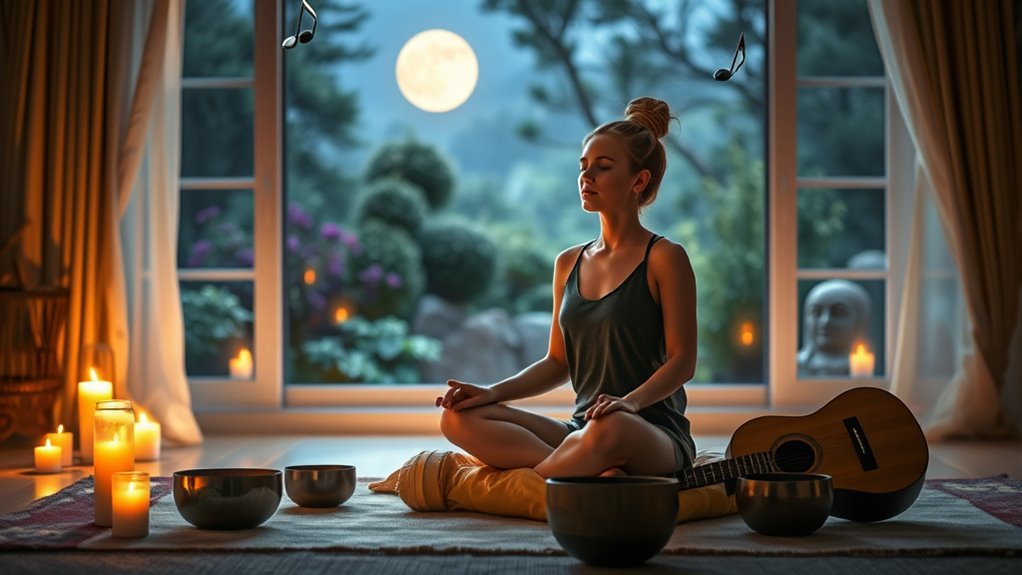
Have you ever wondered how music can enhance your meditation practice? It’s a powerful tool that can deepen your experience and help you reach a state of calm more easily. When you incorporate music into your meditation, you’re fundamentally creating a supportive environment that nurtures your mind and body. Music therapy, often used to promote emotional well-being, can be particularly effective during meditation sessions. By choosing music designed for therapeutic purposes, you provide your brain with gentle stimuli that encourage relaxation and mindfulness. These soundscapes for relaxation often feature calming melodies, ambient sounds, and gentle rhythms that help you let go of stress and intrusive thoughts. They serve as auditory anchors, guiding your focus inward and preventing your mind from wandering.
Listening to soundscapes for relaxation during meditation can create a sense of space and tranquility. These soundscapes are crafted to evoke peaceful feelings, often incorporating natural sounds like flowing water, rustling leaves, or distant thunder. When you listen to such soundscapes, you’re not only masking external noise but also immersing yourself in a serene environment that fosters deep concentration. This can be especially helpful if you’re new to meditation or find it difficult to quiet your mind on your own. The consistent, soothing background noise acts as a gentle reminder to return your focus to your breath or mantra whenever your thoughts drift away. Additionally, understanding the asset division laws in your state can help you feel more confident and prepared when incorporating external factors like music into your mindfulness routine.
Using music therapy and soundscapes for relaxation in your practice isn’t about entertainment; it’s about intentionally shaping your mental state. You can select tracks that resonate with your intentions—whether you seek clarity, emotional release, or simply peace. Experiment with different styles, from soft piano melodies to binaural beats, to discover what best supports your meditation. Additionally, the right music can help you establish a routine, signaling to your brain that it’s time to unwind and enter a meditative state. Over time, these soundscapes become cues for relaxation, making it easier to slip into a calm, focused mindset.
Incorporating music into your meditation isn’t complicated, but it requires mindfulness about your choices. Opt for music that enhances your sense of peace rather than distracts from it. Keep the volume low and avoid overly stimulating sounds. With consistent practice, you’ll find that music therapy and soothing soundscapes for relaxation become invaluable allies in your journey toward inner calm. They help you create a dedicated space for mindfulness, making each session more effective and enjoyable. Ultimately, the right music can elevate your meditation practice, turning it into a more immersive and restorative experience.
As an affiliate, we earn on qualifying purchases.
Frequently Asked Questions
Can Music Replace Traditional Meditation Techniques?
Music can’t fully replace traditional meditation techniques, but it complements them well. Through music therapy and sound healing, you can deepen your relaxation and focus. These methods use sound to promote mental clarity and reduce stress, enhancing your meditation experience. While music offers powerful benefits, combining it with traditional practices can provide a more holistic approach to your mindfulness journey.
What Genres of Music Are Best for Meditation?
Imagine your mind as a calm lake; the right music gently ripples its surface. Ambient sounds and instrumental genres are best for meditation, weaving soothing melodies that quiet mental chatter. Choose genres like ambient, classical, or nature-inspired music, which act as gentle breezes calming your thoughts. These sounds create a tranquil space, helping you drift into mindfulness effortlessly, like a leaf floating downstream toward peaceful serenity.
How Loud Should Meditation Music Be Played?
You should keep your meditation music at a low volume, just enough for ambient sound to gently soothe your mind. Use your volume control to guarantee it’s soft enough that you can still focus inward without distraction. The goal is to create a calming atmosphere, so avoid loud or overpowering sounds. When the music blends seamlessly with your breath and thoughts, you’ll find it enhances your meditation experience.
Is Live Music More Effective Than Recorded Tracks?
Imagine attending a meditation session where a live musician gently plays calming melodies. Live music benefits include a personal touch and dynamic interaction, making it more engaging. While recorded music offers consistency and convenience, its limitations lie in the lack of spontaneity and emotional connection. You might find that live performances deepen your meditation experience, fostering a stronger sense of presence and connection that recorded tracks can’t always replicate.
Can Music Help With Meditation Anxiety or Discomfort?
Yes, music can help with meditation anxiety or discomfort. Through music therapy and sound healing, you can create a calming environment that eases your mind and reduces stress. Listening to gentle, soothing sounds helps you focus and relax, making meditation more accessible. Incorporate calming music into your practice to enhance your experience, lower anxiety, and foster a deeper sense of tranquility.
calming ambient music for meditation
As an affiliate, we earn on qualifying purchases.
As an affiliate, we earn on qualifying purchases.
Conclusion
Incorporating music into your meditation is like adding a gentle breeze to a calm lake—it enhances your experience without overwhelming it. When you choose the right melodies, you create a soothing environment that deepens your focus and relaxes your mind. Remember, the goal isn’t to drown out your thoughts but to guide them peacefully. So, trust your instincts and let music be the gentle current that carries you toward inner peace.
As an affiliate, we earn on qualifying purchases.
As an affiliate, we earn on qualifying purchases.
Fall Picks
fall essentials
As an affiliate, we earn on qualifying purchases.