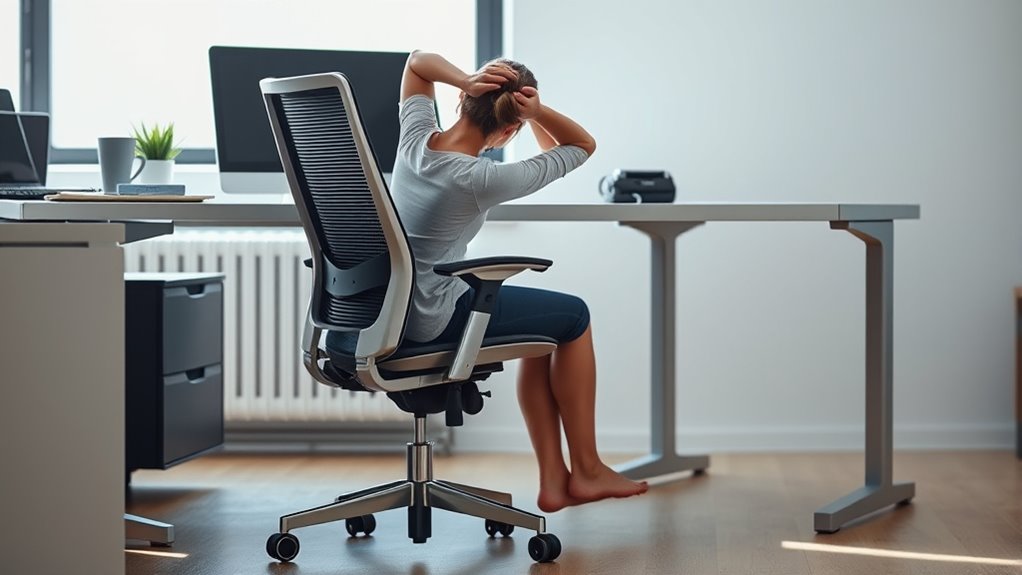

To boost focus and relieve tension during work, try this quick desk yoga flow. Start by adjusting your posture, sitting upright and taking deep breaths. Gently stretch your neck and shoulders, then raise your arms overhead for a side stretch. Incorporate seated spinal twists to enhance mobility, and use mindful breathing throughout to stay relaxed. These simple poses can be done right at your desk, and if you keep going, you’ll discover even more ways to stay energized and pain-free.
Key Takeaways
- Incorporate neck tilts and shoulder rolls to release tension without leaving your chair.
- Use overhead stretches and spinal twists for spinal mobility and posture improvement.
- Perform seated forward bends and side stretches to enhance flexibility and reduce stiffness.
- Practice mindful breathing during poses to boost focus and mental clarity.
- Combine these poses into a quick, 6-move flow to refresh your body and mind at your desk.

If you spend most of your day at a desk, incorporating a quick yoga flow can considerably reduce tension and boost your focus. Sitting for hours can lead to stiffness, poor posture, and increased stress, but simple stretches and mindful movements can counteract these effects. By integrating these poses into your routine, you not only improve your ergonomic benefits but also cultivate mindfulness techniques that enhance your overall well-being. You don’t need to leave your chair or disrupt your workflow; just a few minutes can make a significant difference.
Quick desk yoga boosts focus, relieves tension, and improves posture—all in just a few mindful minutes.
Start by sitting upright with your feet flat on the ground and your hands resting on your thighs. Take a deep breath, elongate your spine, and roll your shoulders back to release tension. This small adjustment improves your ergonomic benefits by promoting better posture, which can prevent discomfort and long-term musculoskeletal issues. As you breathe deeply, focus on mindfulness techniques—being present in the moment helps you reset mentally and reduces stress. This simple act of awareness can improve concentration and productivity throughout your day.
Next, stretch your neck gently by tilting your head toward your right shoulder, holding for a few breaths, then switching sides. This relieves neck strain caused by craning forward or hunching over your keyboard. Incorporate slow, controlled movements to engage your muscles without overextending. As you do this, keep your awareness on your breath, aligning movement with inhalation and exhalation. This mindful breathing enhances relaxation, helping you stay centered despite a busy schedule.
Then, raise both arms overhead and interlace your fingers, stretching upward to lengthen your spine. Hold this position for a few breaths, feeling the stretch along your sides and back. This move not only helps with flexibility but also encourages mindful awareness of your body’s sensations. It’s an opportunity to pause, breathe deeply, and reset your mental state. Repeat as needed to break up long periods of sitting, promoting circulation and reducing fatigue.
Finally, practice seated spinal twists by turning your torso to one side, gripping the armrest or the back of your chair for support. Hold briefly, then switch sides. Twists promote spinal mobility and help release tension accumulated from poor posture. Stay attentive to your breath during the movement, making this a moment of mindfulness that clears your mind. These quick, intentional movements keep your body active and your mind focused, making your workday more comfortable and mindful. Additionally, incorporating awareness of posture can further enhance your ergonomic benefits and prevent discomfort.
Incorporating these simple desk yoga poses into your daily routine allows you to enjoy ergonomic benefits, combat stiffness, and develop mindfulness techniques—all without leaving your chair. With consistency, you’ll notice increased energy, reduced stress, and a healthier, more mindful approach to your workday.

YeeBeny Breathing lamp Guided 3 Color 478s Meditation for Stress Relief
- Breathing Lamp Function: Reduces stress and promotes relaxation
- Material: Made of soft silicone for comfort
- Design: Elegant white appearance for decor
As an affiliate, we earn on qualifying purchases.
Frequently Asked Questions
Can Desk Yoga Help Reduce Lower Back Pain?
Yes, desk yoga can help reduce lower back pain. It offers ergonomic benefits by encouraging proper posture and relieving tension. Using simple stretching techniques, you can loosen tight muscles and improve flexibility without leaving your chair. Regularly incorporating these poses into your day promotes better spinal alignment, decreases discomfort, and boosts overall comfort at work. So, give desk yoga a try to support your back health effectively.
How Often Should I Do These Poses During Work?
You should aim for a break frequency of every 60 to 90 minutes to keep your body active and reduce tension. The ideal timing is during short pauses in your work, like when you’re shifting between tasks. Performing a few desk yoga poses during these breaks helps prevent stiffness and improves focus. Consistency is key, so try to integrate these movements into your daily routine for maximum benefit.
Are Desk Yoga Poses Suitable for Beginners?
Oh, sure, because doing chair stretches and seated twists is only for yoga pros, right? Actually, desk yoga poses are perfect for beginners. You don’t need to be flexible or experienced—just start with simple chair stretches and seated twists. These poses are gentle, easy to follow, and safe. So, yes, even if you’re new, you can easily incorporate them into your day to boost comfort and focus.
Can Desk Yoga Improve Focus and Productivity?
Yes, desk yoga can improve your focus and productivity. By incorporating mindfulness practices and stretching techniques into your day, you become more aware of your body and mind. These quick, gentle movements help reduce tension and refresh your energy, making it easier to concentrate on tasks. Regularly practicing desk yoga fosters a calmer, more centered mindset, ultimately boosting your overall efficiency and work performance throughout the day.
Are There Any Precautions for Pregnant Women?
Imagine gently guiding your body through calming stretches during pregnancy; it’s safe, but pregnancy safety is key. As you practice desk yoga, be mindful of prenatal modifications, avoiding poses that put pressure on your abdomen or cause imbalance. Always consult your healthcare provider before starting new exercises. By respecting these precautions, you can enjoy calming movements that support your comfort and well-being throughout your pregnancy.

LICRAFT Desk Sculpture Decor Stress Relief Office Gift
- Material: Stainless steel balls, ABS base
- Age Restriction: Not suitable for children under 14
- Creative Sculpture: Create mesmerizing magnetic sculptures
As an affiliate, we earn on qualifying purchases.
Conclusion
Now that you’ve got these simple desk yoga poses, why not make movement a part of your daily routine? Sitting all day can take a toll, but with just a few minutes, you can stretch, refresh, and re-energize your body. Isn’t it worth investing in your well-being? So next time you’re feeling stiff or sluggish, remember these quick poses. Your body will thank you for taking a moment to breathe and stretch—right at your desk.

SANDCLE Moving Sand Art Picture - Sand Art Liquid Motion 3D Deep Sea Sandscape, Round Glass Frame Display Flowing Sand Relaxing Toy for Desktop Home Office Work Ocean Decor(Black, 7")
- Relaxing 3D Sand Art: Rotates 360° to create unique sand patterns
- Stress Relief & Relaxation: Calms nerves and relieves eye strain
- High-Quality Materials: Crystal-clear glass and durable ABS frame
As an affiliate, we earn on qualifying purchases.

KPNUWN Moving Sand Art Liquid Motion, 3D Deep Sea Sandscape Color Quicksand Decor, Round Glass Moving Sand Art Picture Relaxing Desktop Home Office Work Decor (Blue, 7 inch)
- Enhances Relaxation and Focus: Creates calming 3D sand flow
- Unique Rotating Design: 360° rotation reveals new images
- Elegant Home Decor: Adds aesthetic appeal to any space
As an affiliate, we earn on qualifying purchases.